Light Cocoon · Cocoon de Luz · 2026–2027
Light
Cocoon
A shelter made of the light of those who meditate.
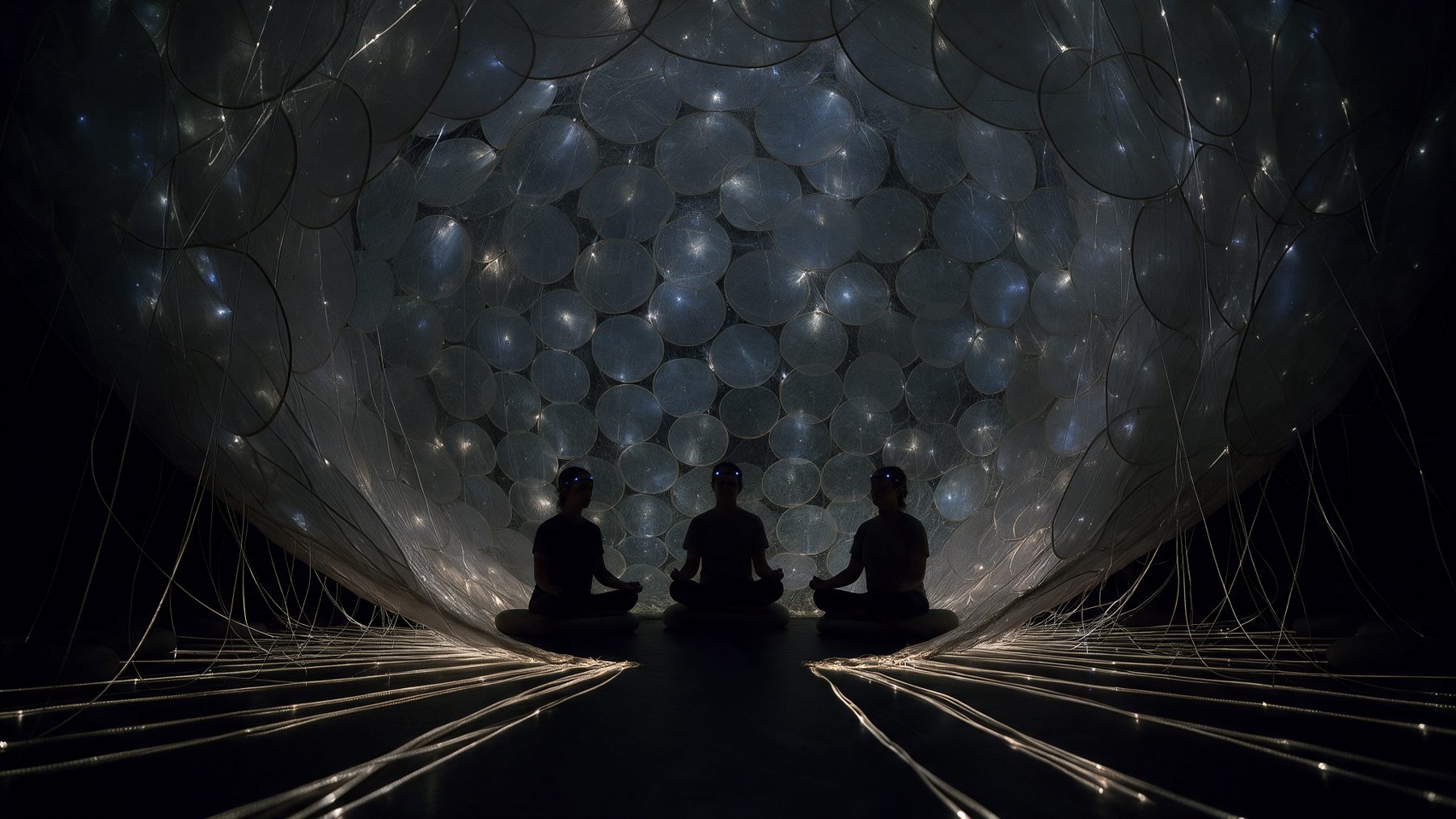
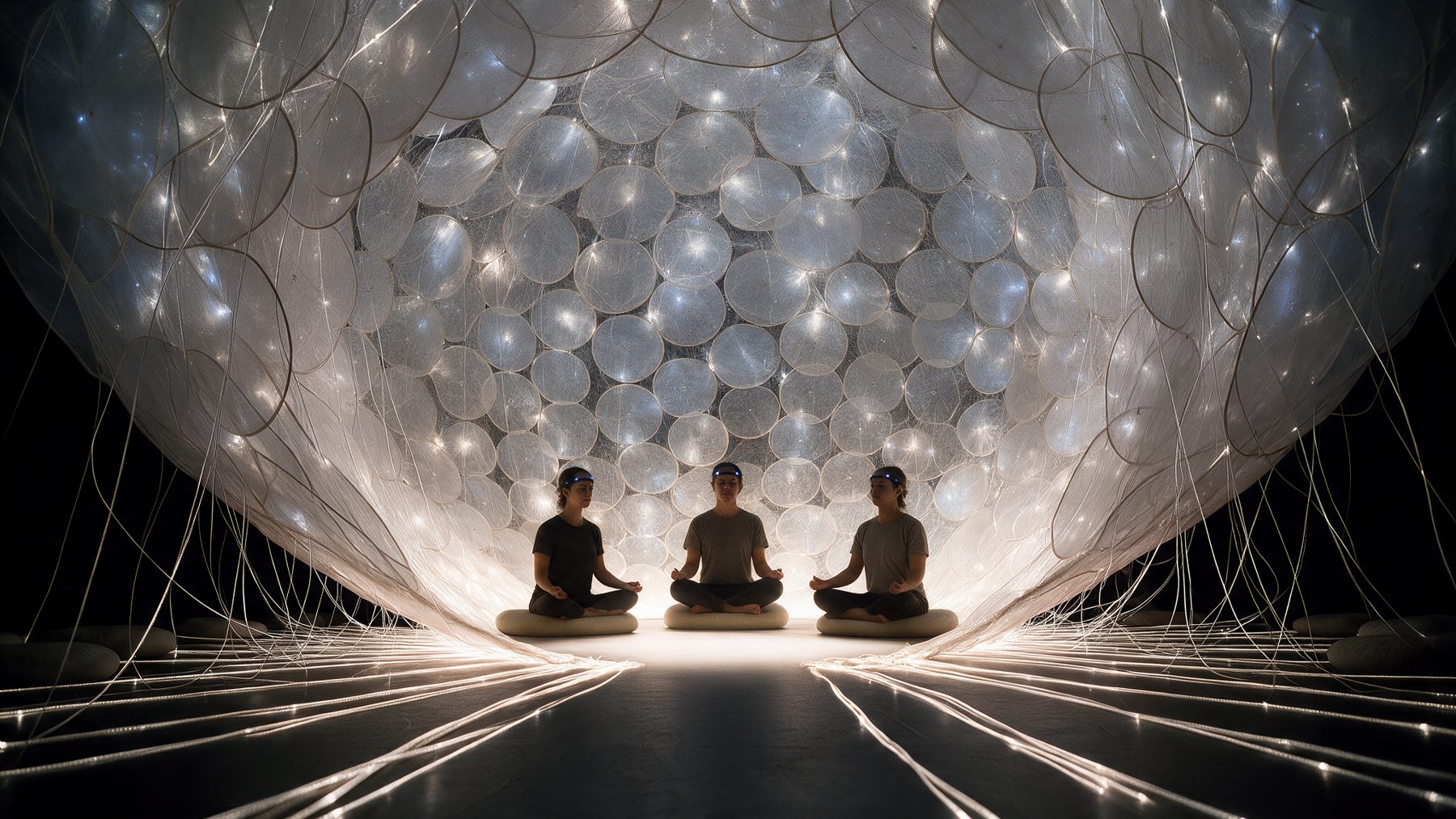
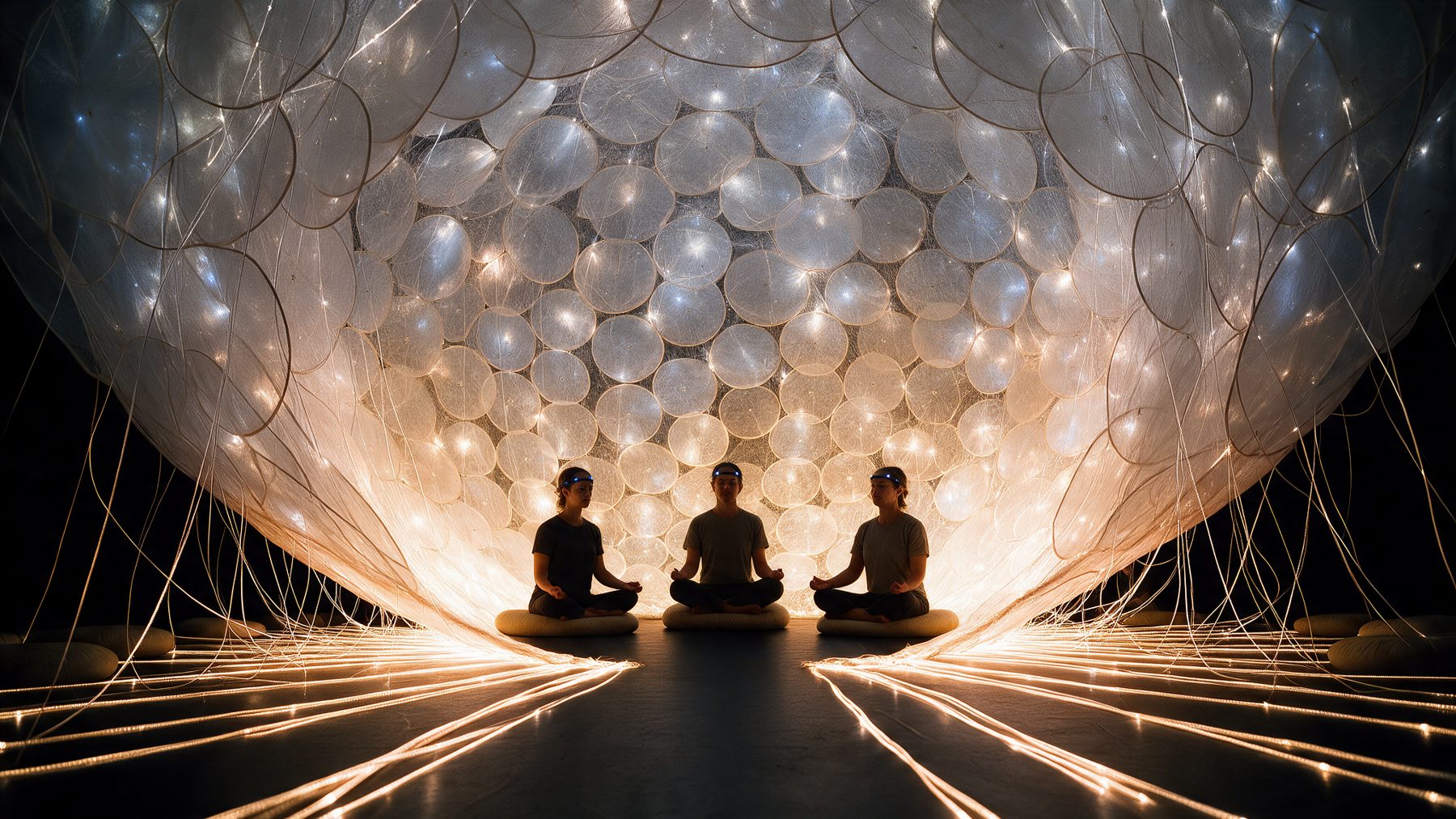
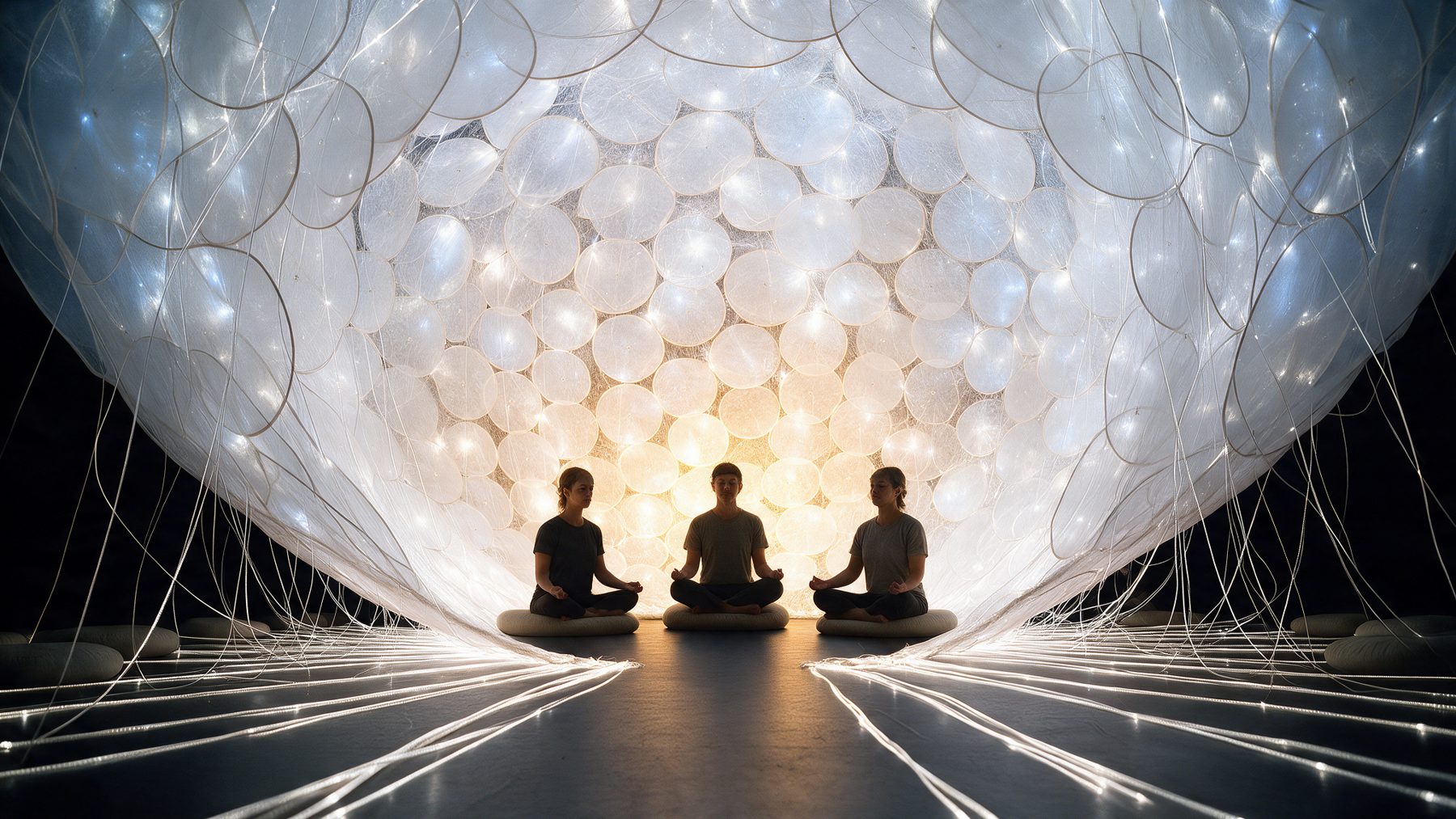
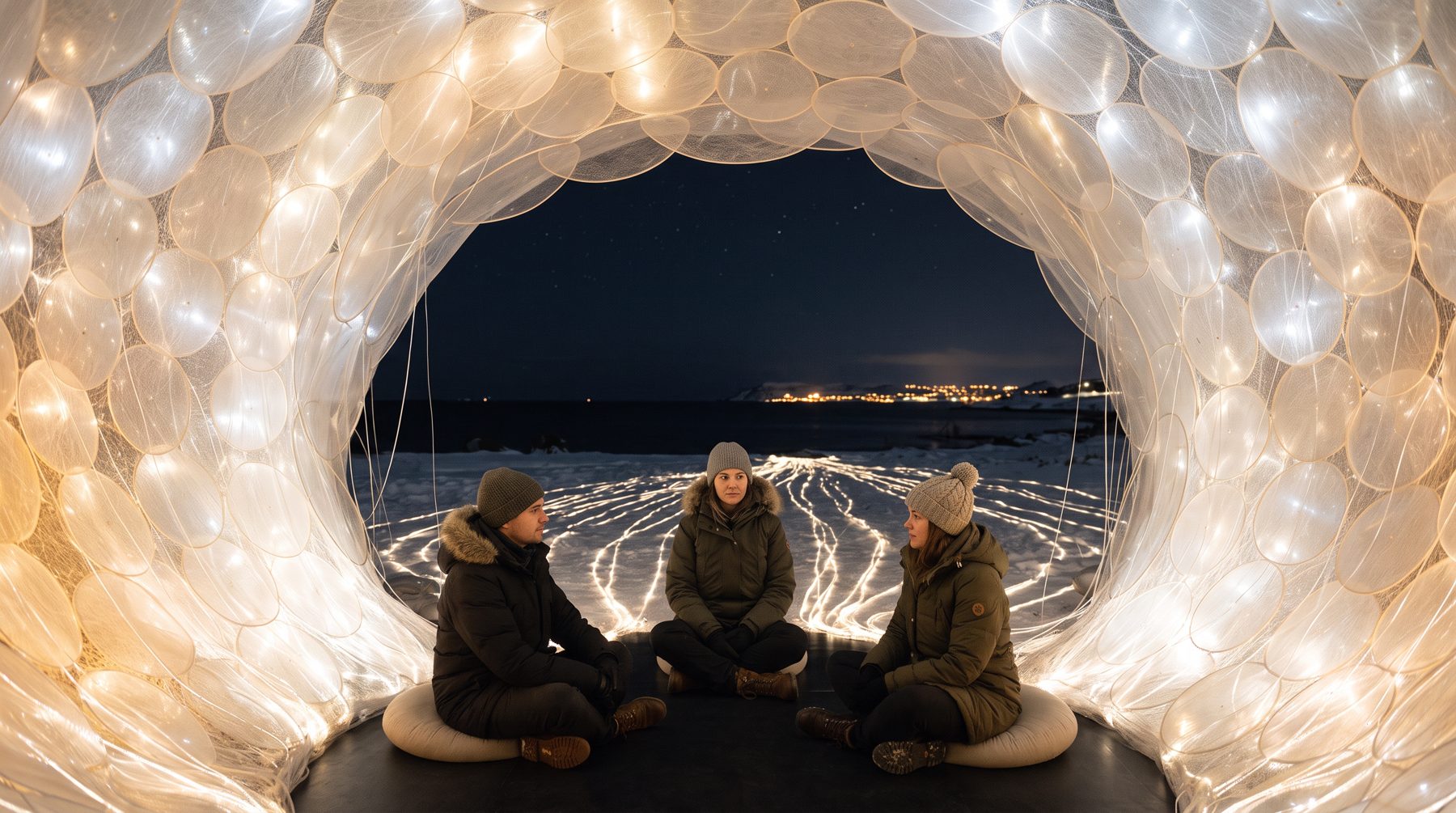
Three people sit inside a sphere of light and become still. The light does not come from outside: it is born as their attention settles, and no one can light it alone.
Light Cocoon is the latest body in a single line of work. It begins in the Quantum Mandalas paintings, radial fields of light that gather toward a centre and never close upon it. The mandalas then left the wall as suspended sculptures of silk organza and optical fibre, hanging in darkened rooms with light falling from above. The Cocoon is the moment the mandala becomes a place: a sphere one can enter.
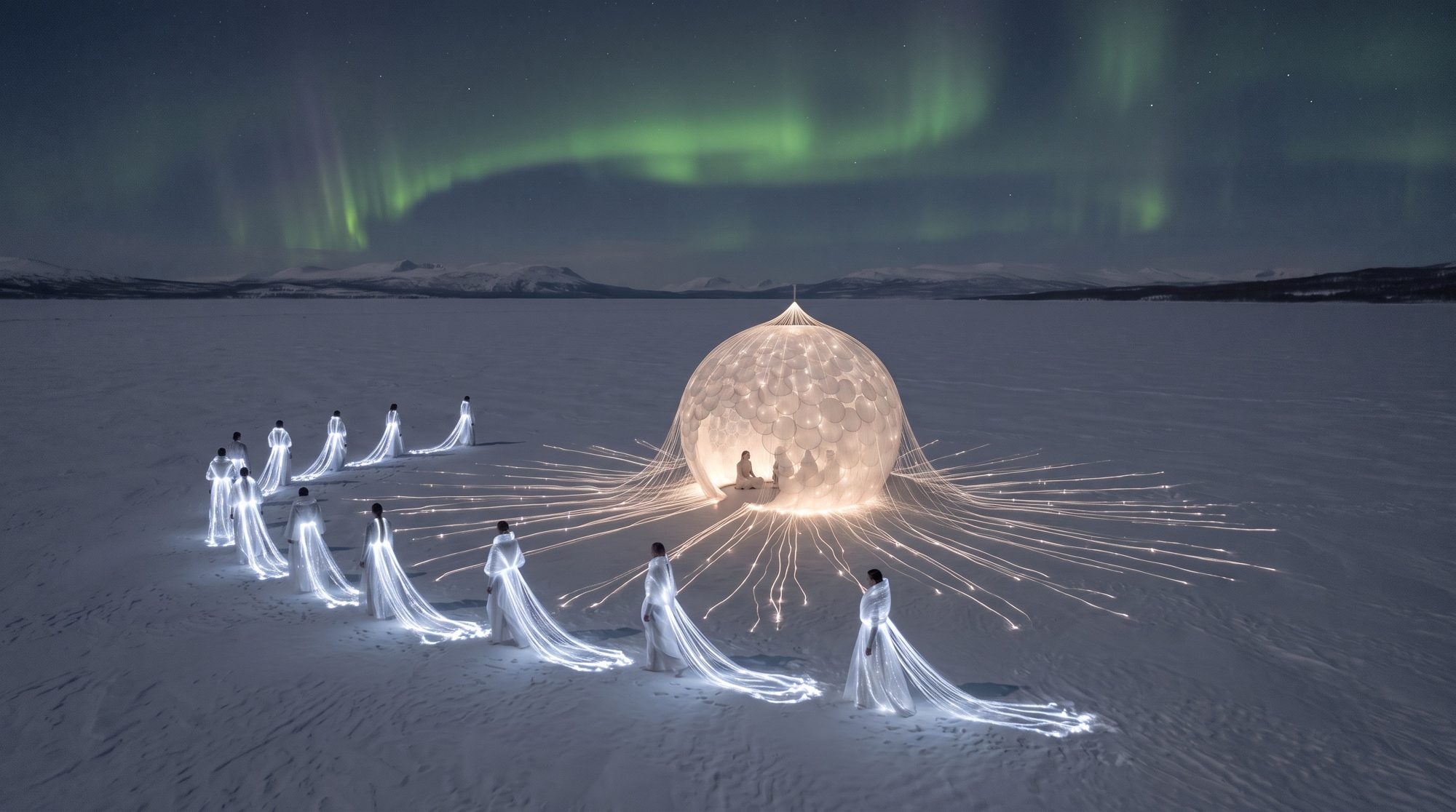
It exists in two states that complete each other. In the museum, a soft veil of translucent fleece and tulle rests on the floor and its fibres spread across the room in rays; there each meditation is recorded, the rhythm of attention read through light EEG headbands. Outdoors, on snow, it becomes an igloo of light, a closed shelter of translucent fibreglass that glows evenly by the winter sea; its light is those recorded meditations, returned as light to whoever enters. Around it, walkers circle like the birds that carry the sun in my Sunbirds series.
The Quantum Mandalas paintings are radial fields: particles of light that gather toward a centre and never close upon it, as if the form were caught at the instant it begins to cohere. Each one is drawn stroke by stroke on iPad Pro and printed in archival pigment on canvas.
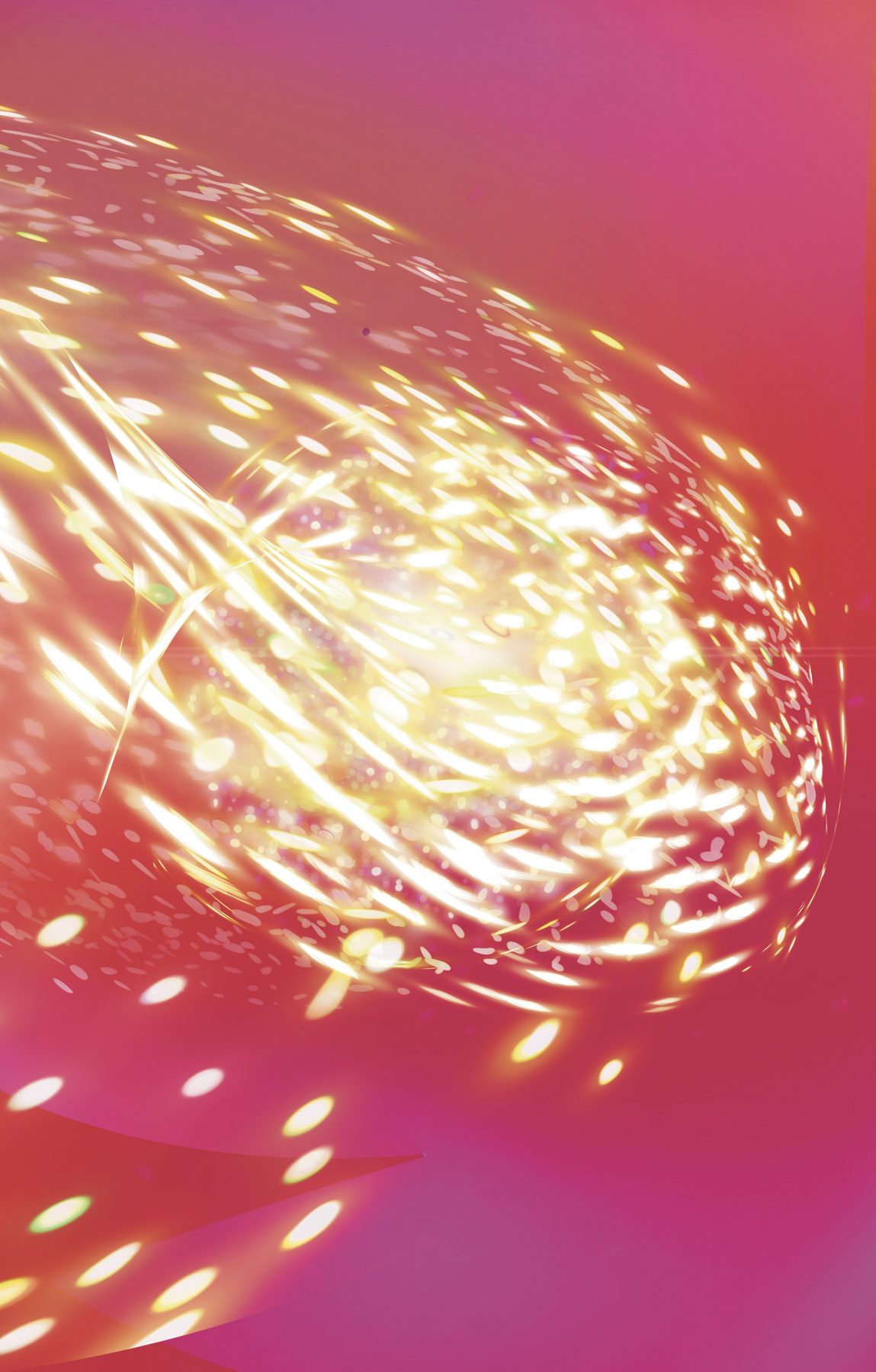
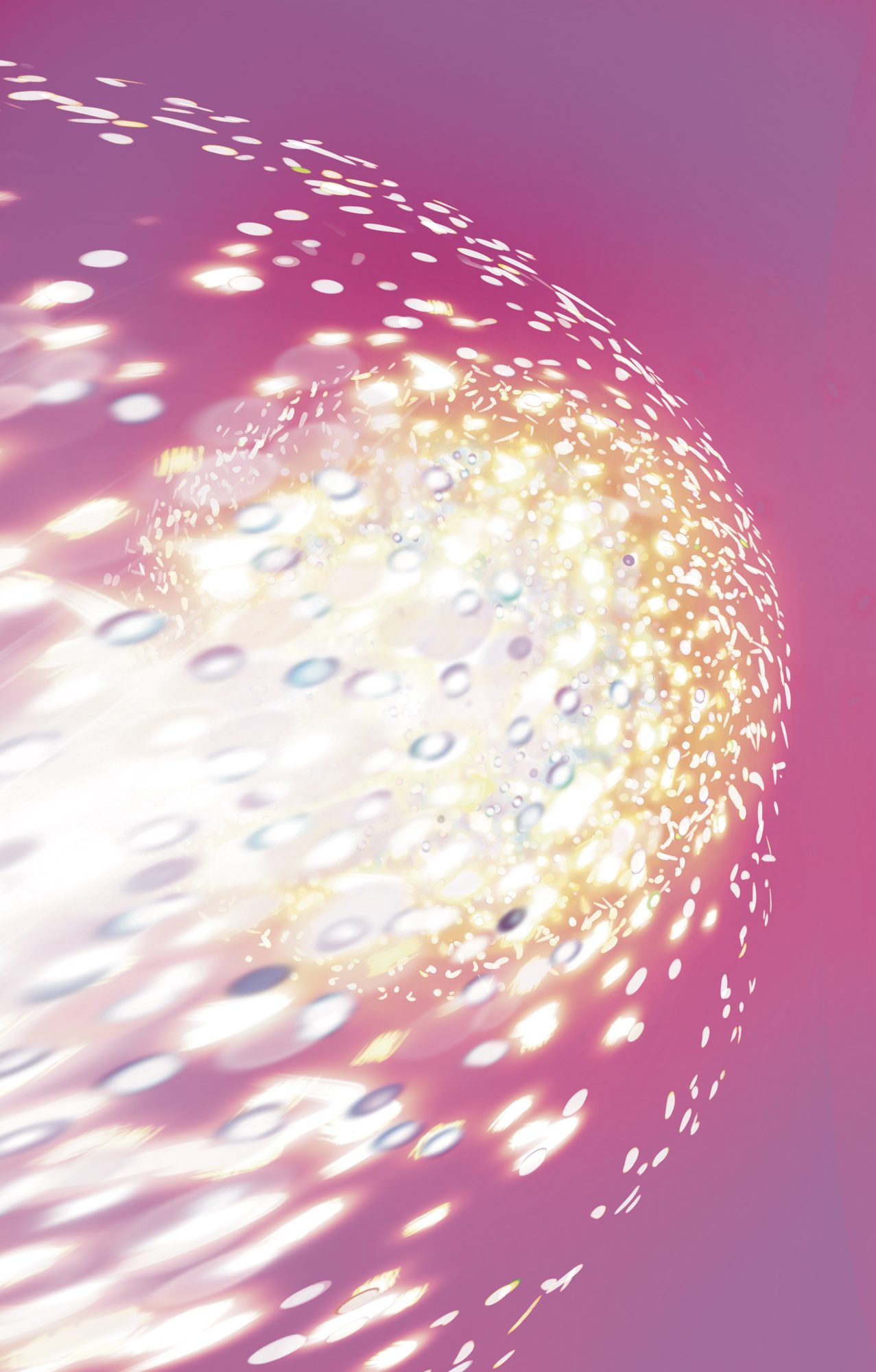
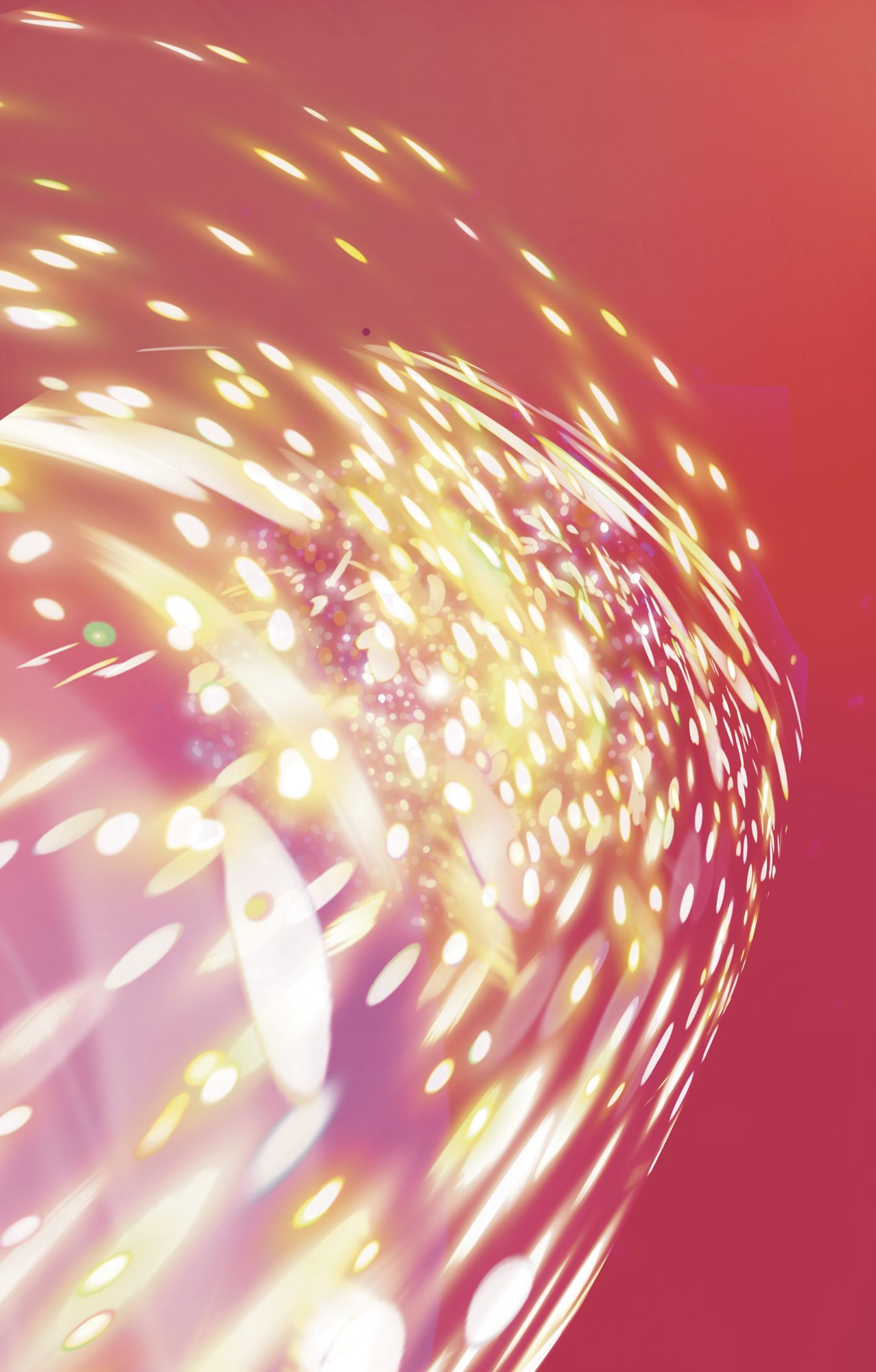
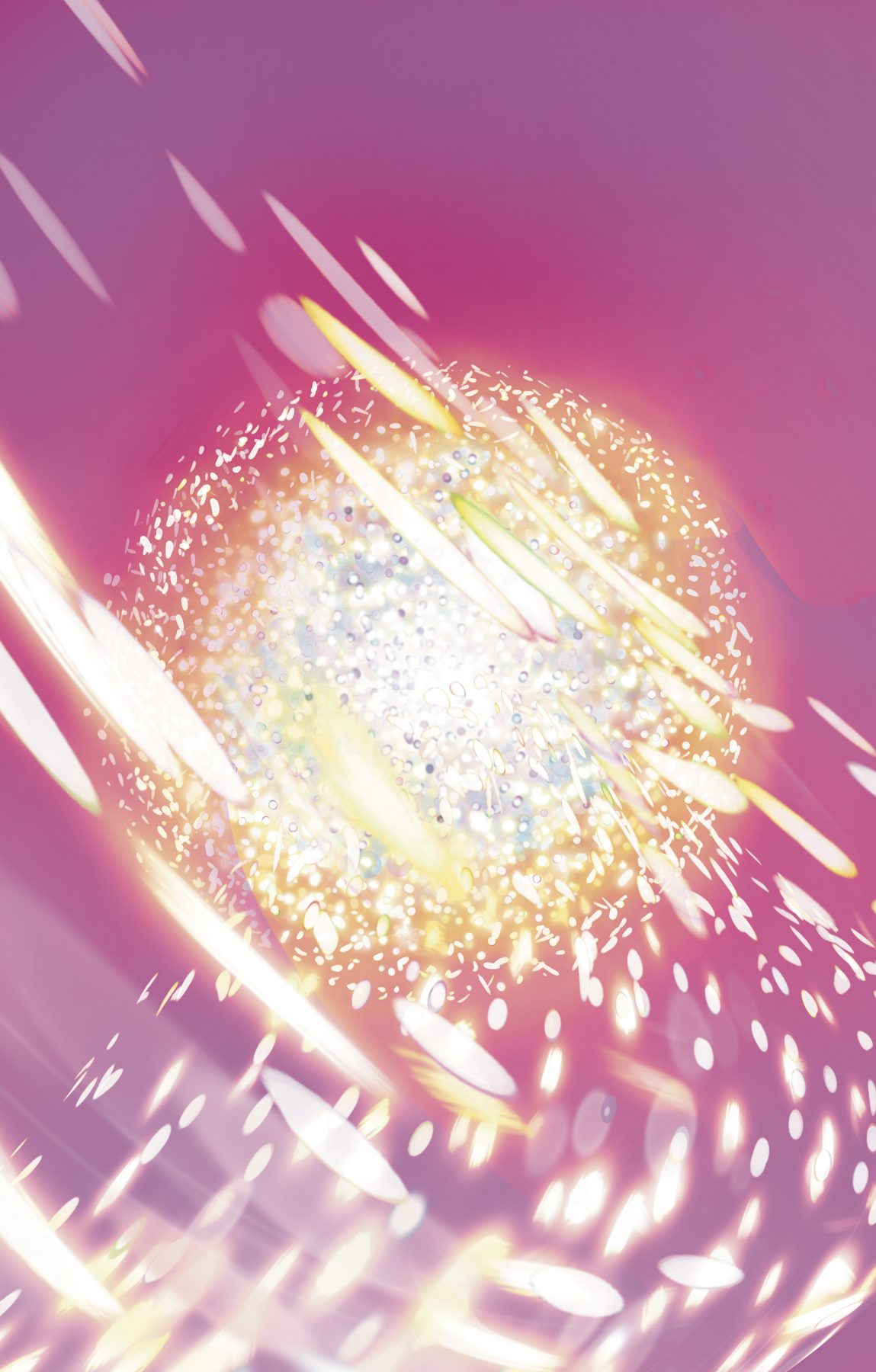
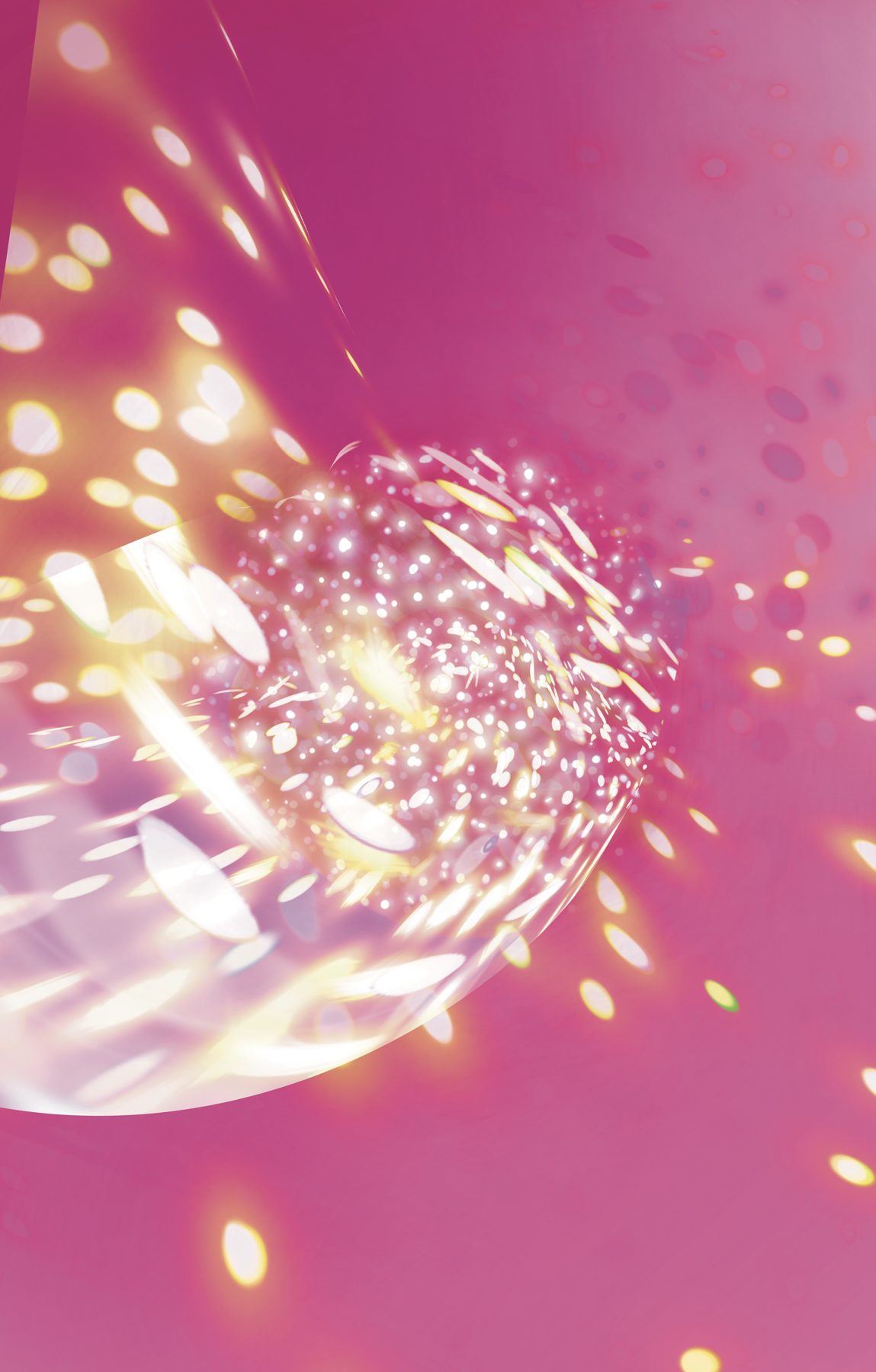

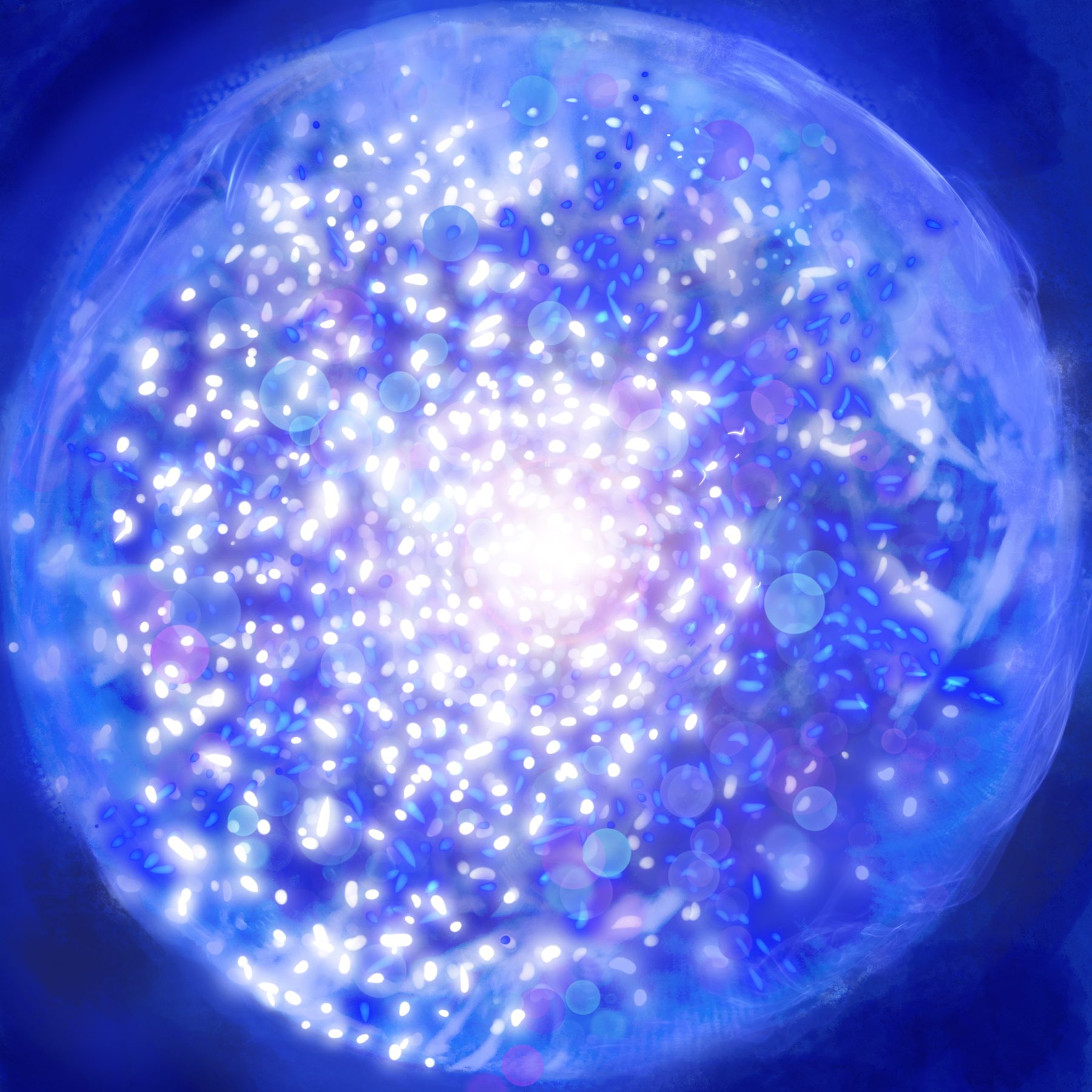
Each mandala also exists in time: it turns, opens and gathers again to its own music.
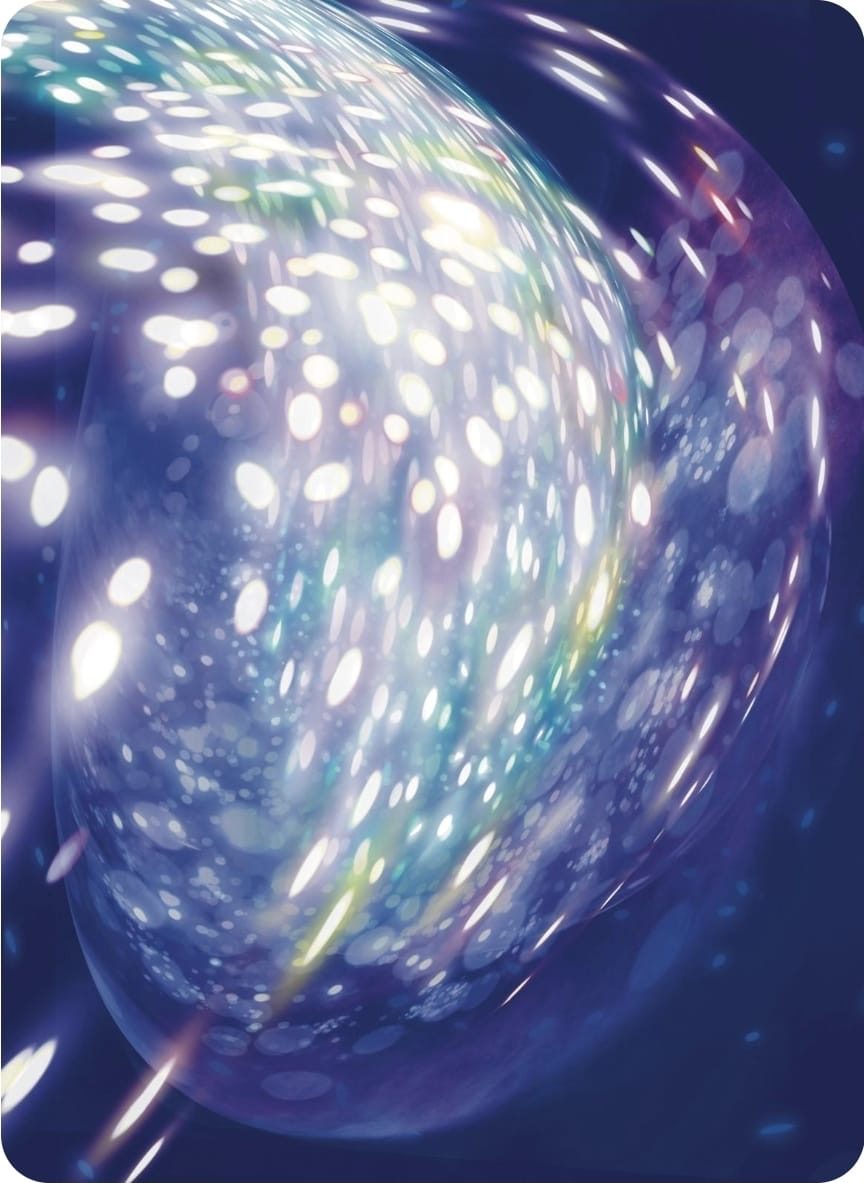
Each painting then leaves the wall and becomes a body in suspension. Hundreds of overlapping discs of translucent silk organza, over a core of side-emitting optical fibre, gather into a volume about 150 cm across, hung on monofilament in a darkened room. Each body keeps one register of colour, the palette of the painting it descends from, and is lit only from within. In the museum the light falls from above: fibres descend from the ceiling and end as points of light in the air around the visitor.
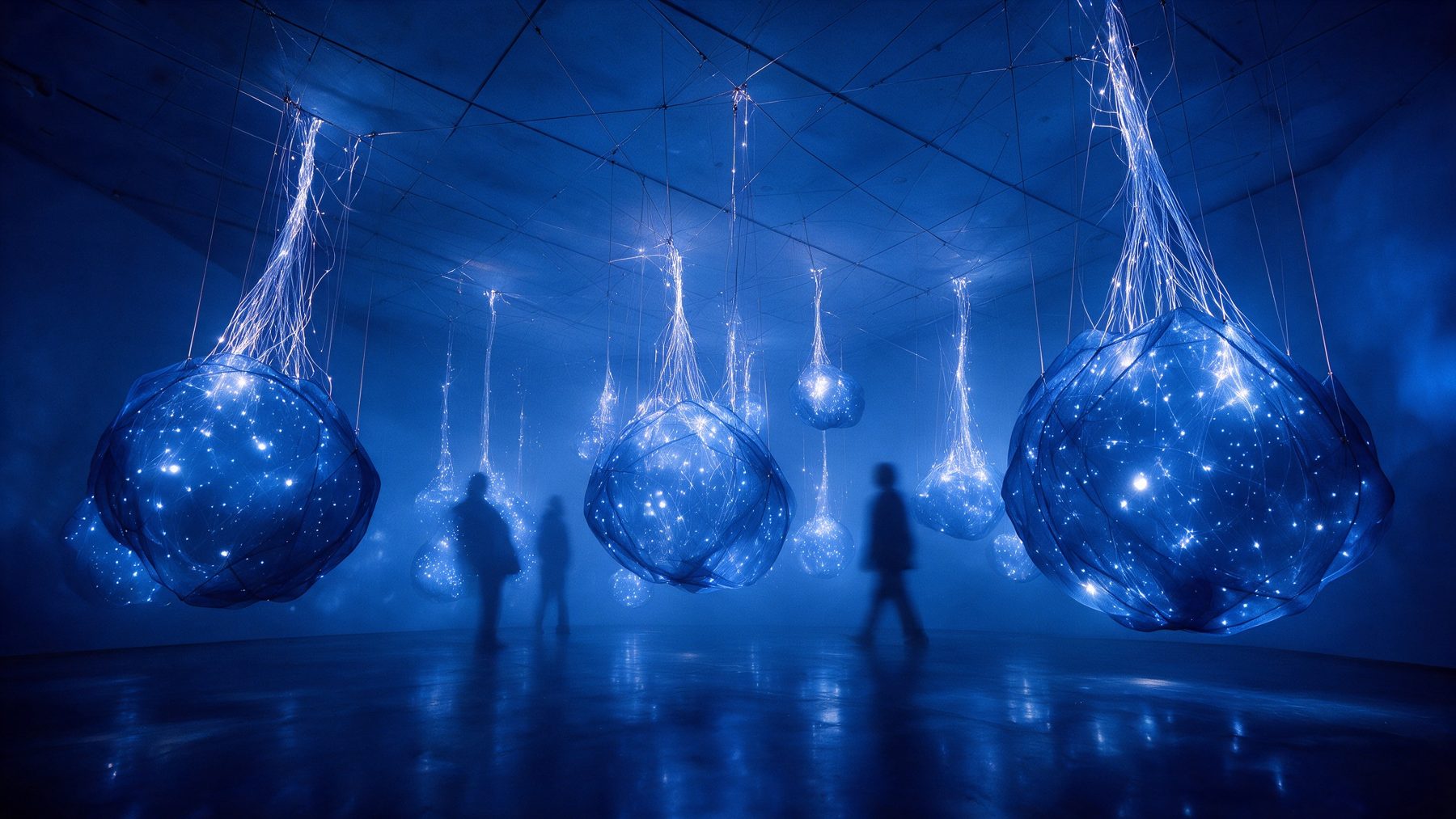
Silk organza discs, crumpled organza, side-emitting optical fibre, LED, monofilament. Approx. 150 cm diameter each; installation dimensions variable. Visualisations of works in development, 2026.
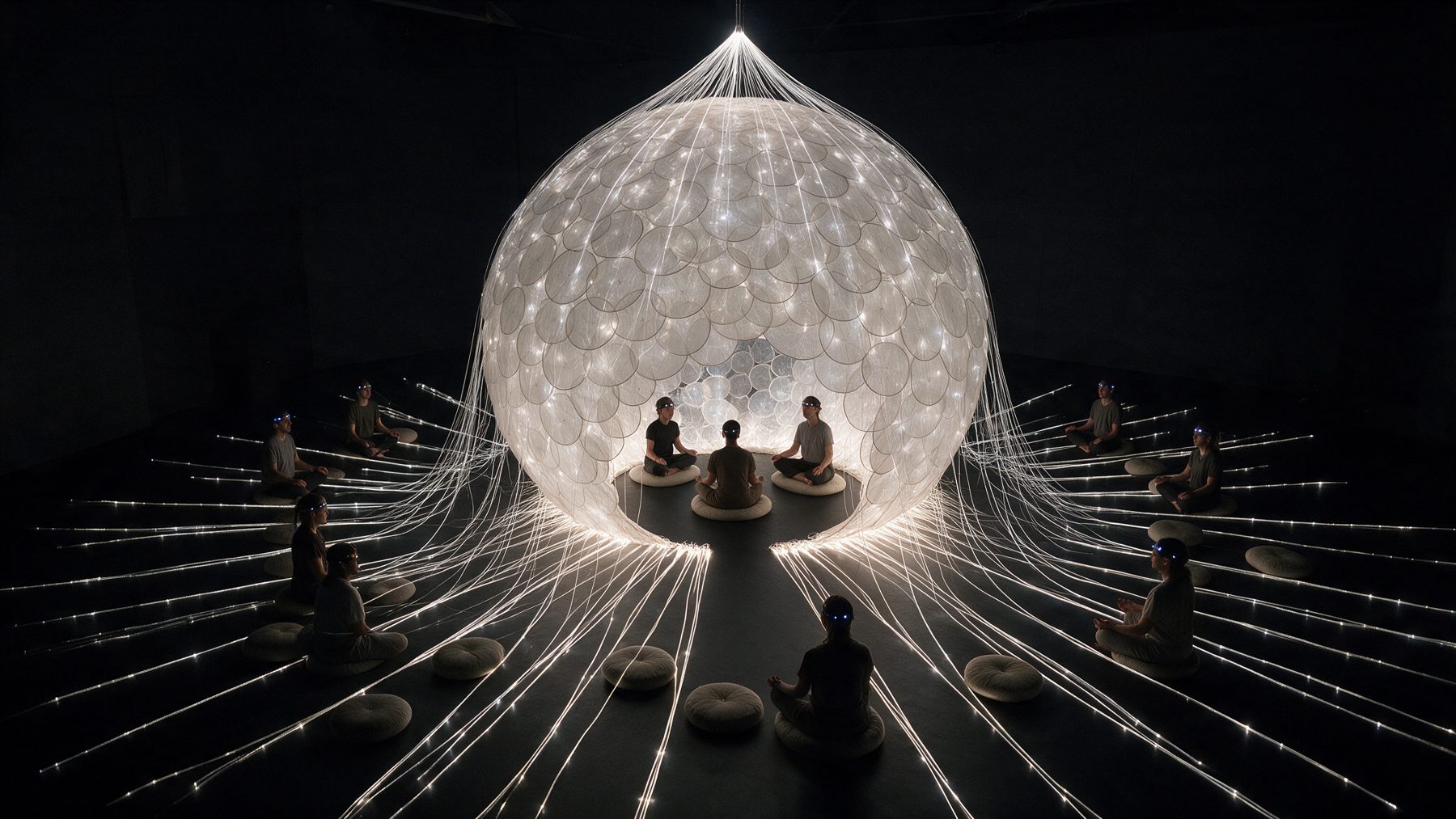
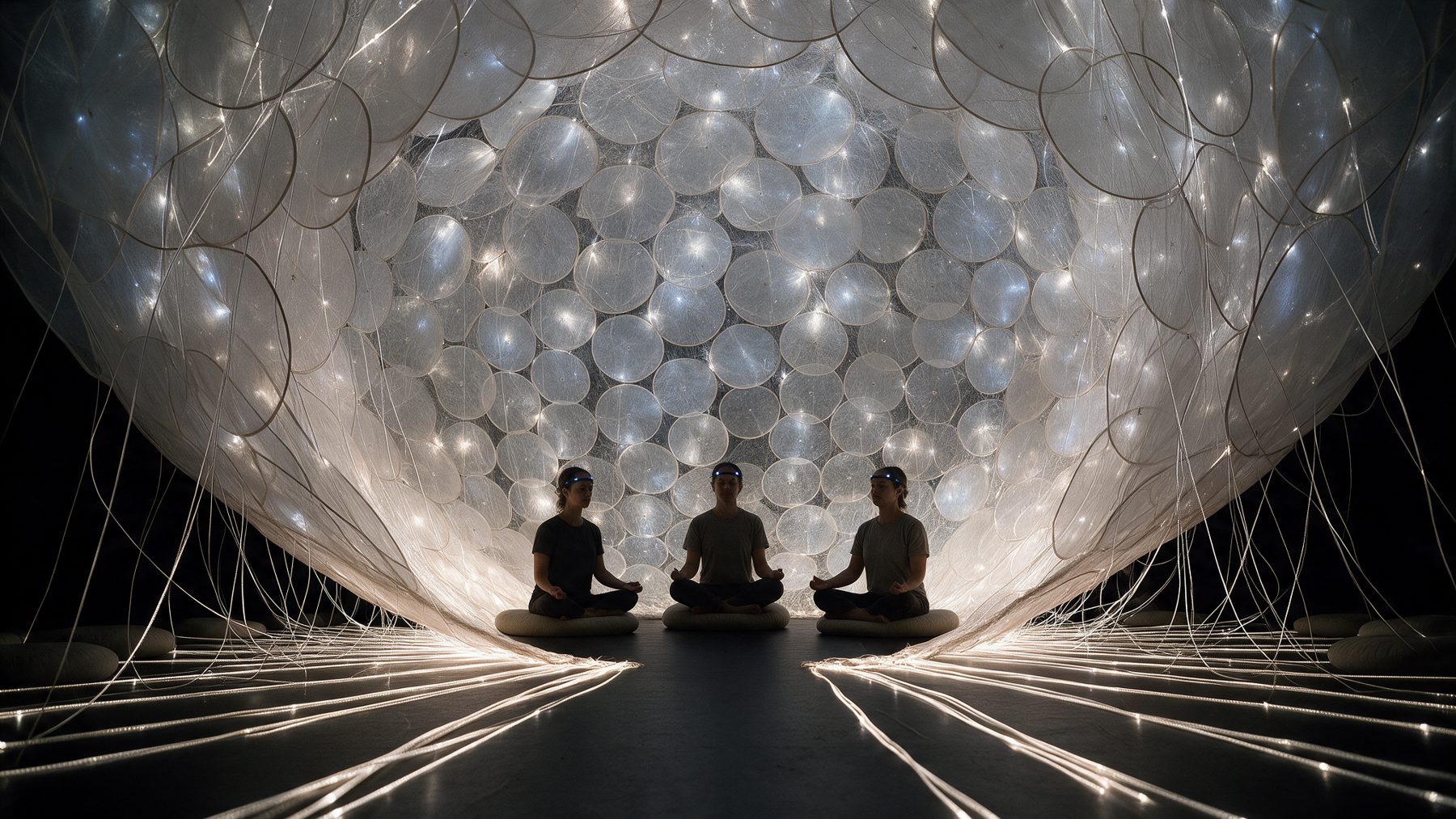
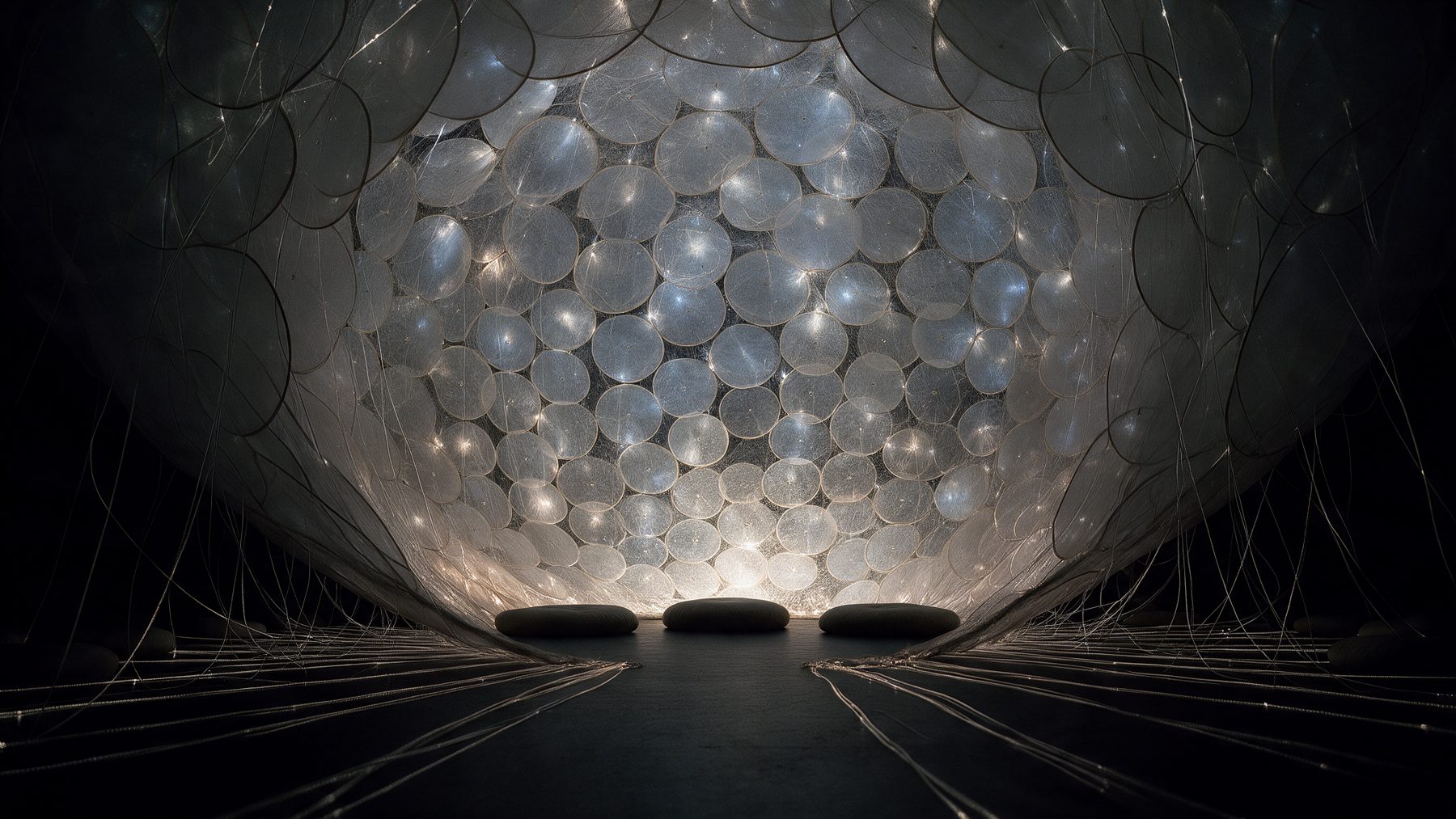
The sphere rests on the floor, open at its base. Three people sit inside in silence; the dome kindles as their attention settles and falls into accord.
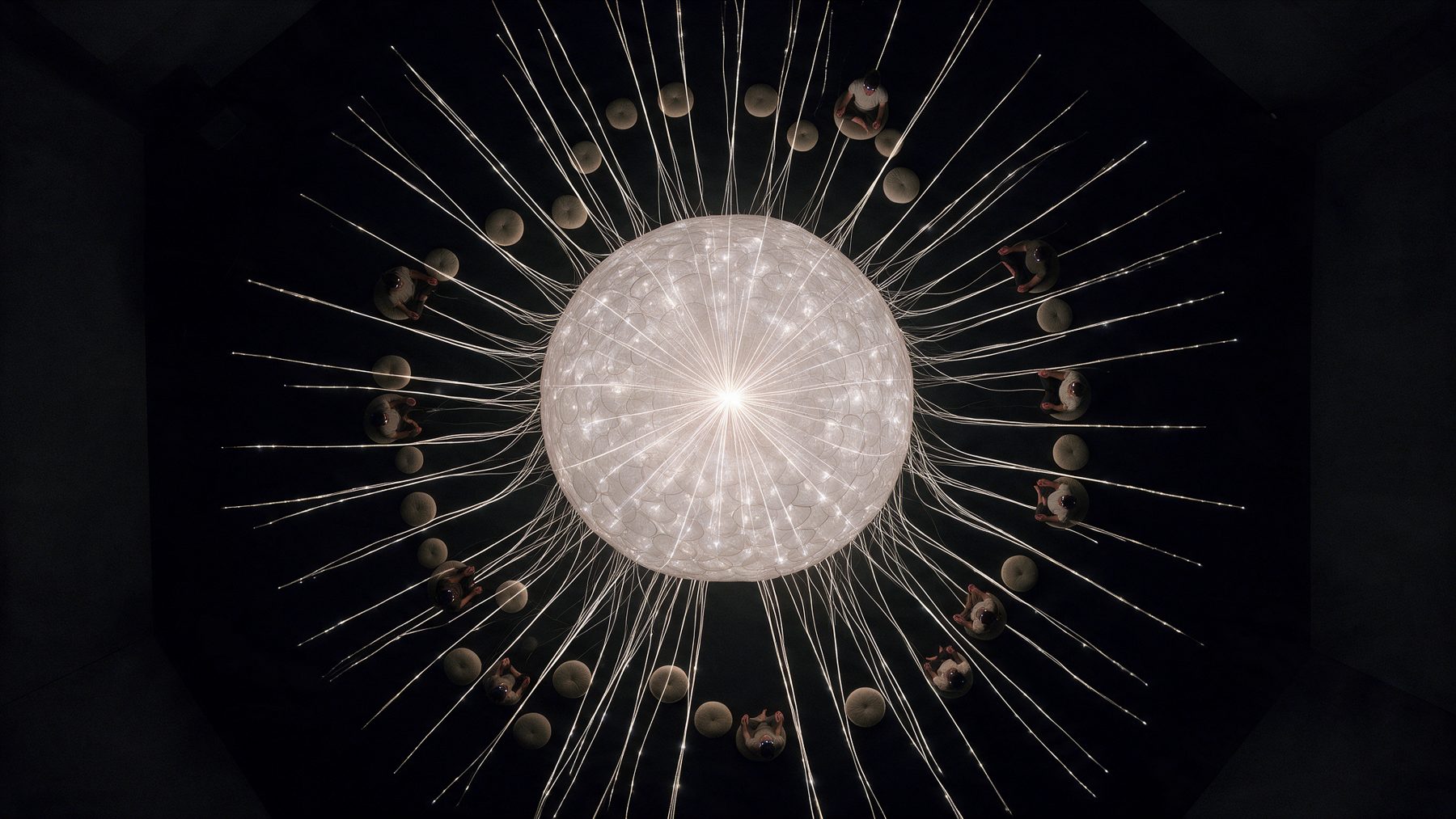
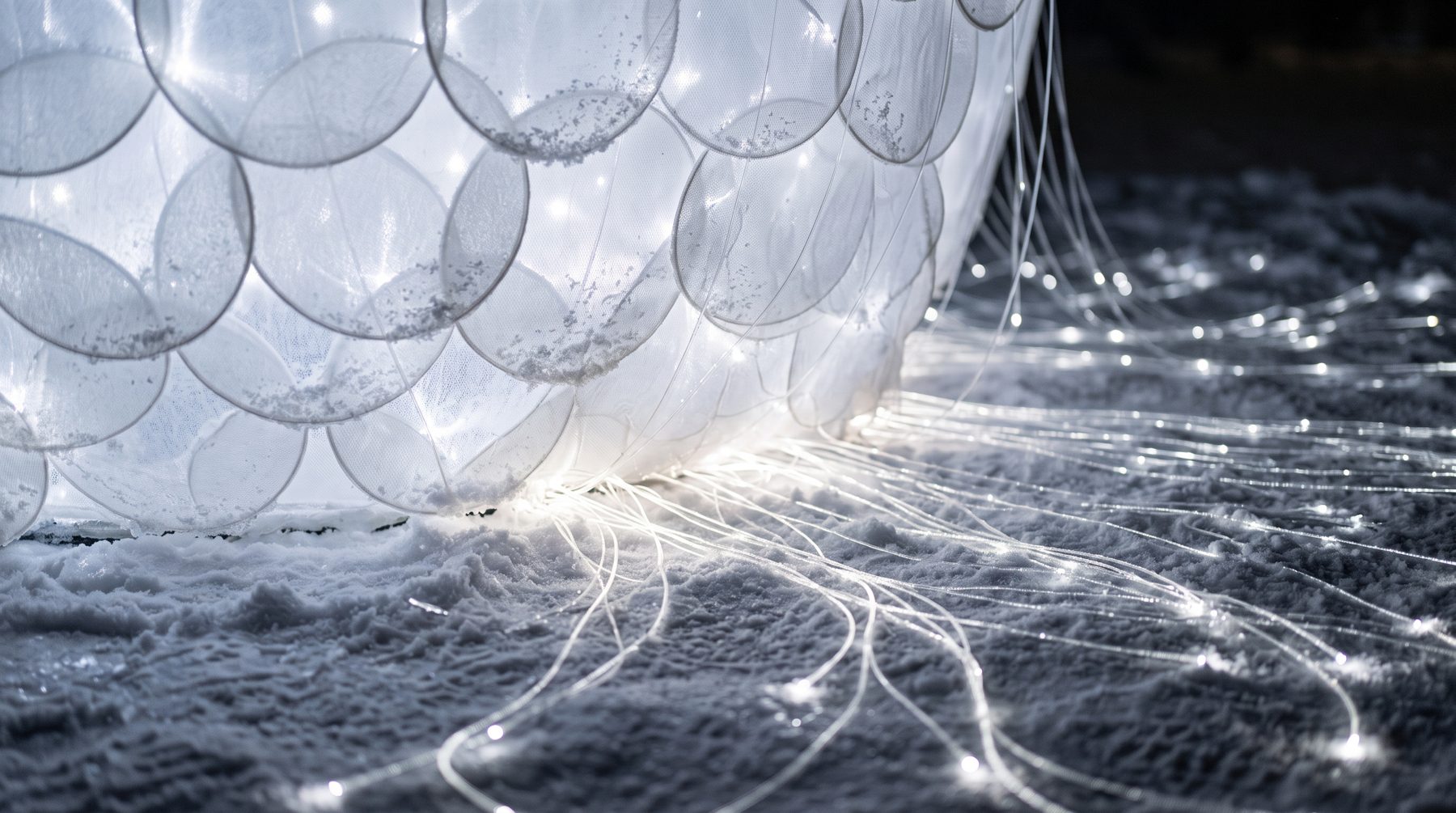
The veil is made of hundreds of discs of translucent non-woven fleece, irregular as cocoon silk or spider web, layered like scales with soft organza tulle over a woven fabric of side-glow optical fibre. The fleece veils the light; the tulle lets it through. Nothing is lit from outside. From the apex the fibres fall like rain over the shell; others spring from the base and keep travelling across the floor in straight rays, drawing a mandala of light some fifteen metres across. Between the rays wait the cushions of those who meditate outside, accompanying.
Those seated within wear light EEG headbands. The work reads no thoughts; it registers the rhythm of attention. When attention steadies, light is born on the floor beside each meditator; when the three rhythms coincide, it climbs the dome until the whole sphere is lit. If attention scatters, the sphere neither switches off nor punishes: it slows its pulse, warms its colour towards amber and guides the room back to calm.
Every session is recorded. Together with laboratory recordings of meditators with many years of practice, these traces form an archive of attention turned into light: the light that later inhabits the cocoons outdoors. The work extends the question of my doctoral research Huella de Luz (Trace of Light) and makes it circular: the meditator's trace becomes light, and that light returns through the eyes of others and leaves its own trace.
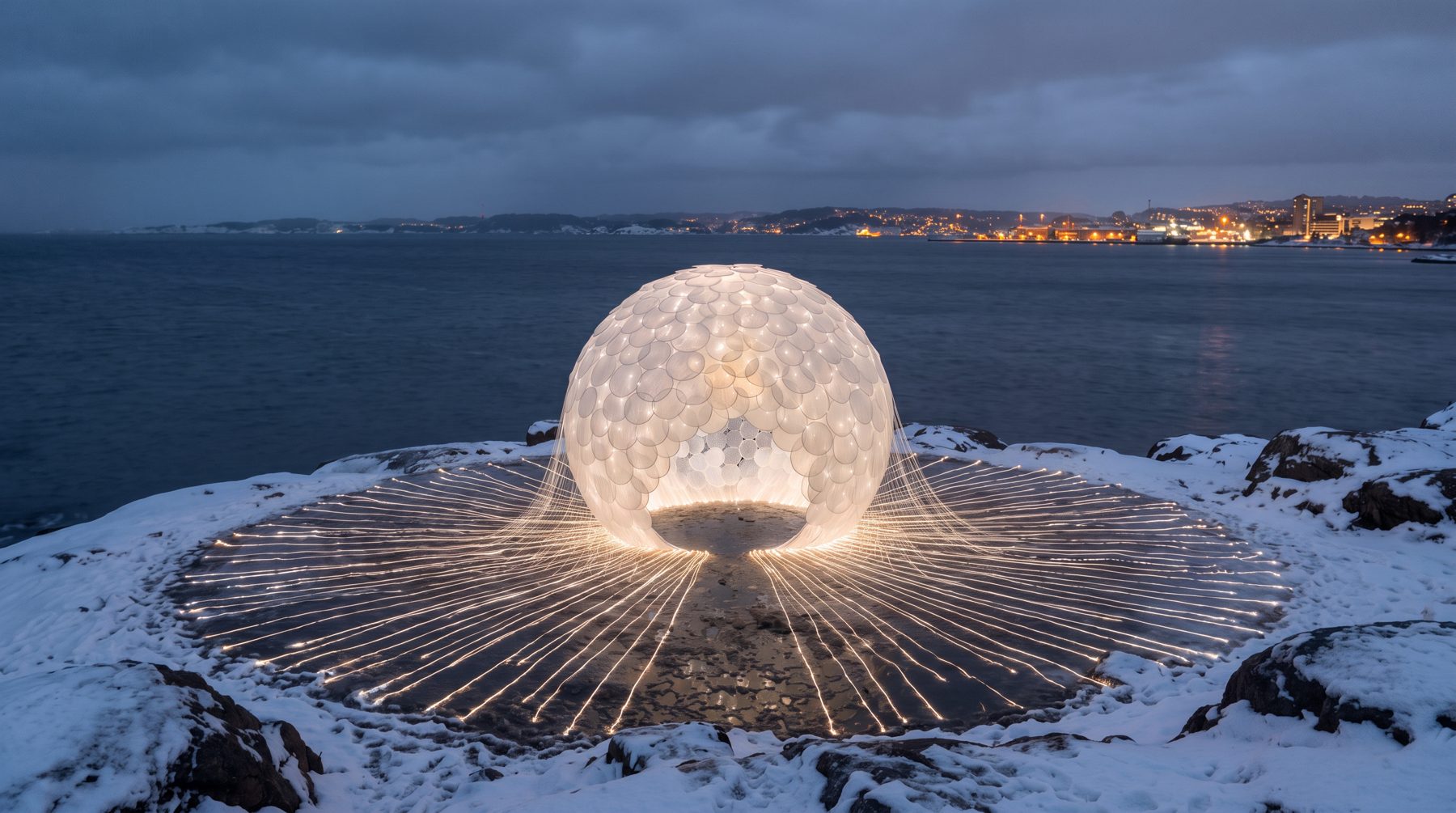
The igloo is the oldest architecture of winter: a shelter built from the very material that threatens life. Light Cocoon applies the same logic to the darkness of the northern night. What the season withholds, light, becomes the wall of the shelter.
For the snow the veil becomes a closed dome, entered through a single low arch, like an igloo. Its shell is rigid translucent fibreglass, double-skinned so that the air held between the skins insulates; its surface is made of hundreds of discs in which the glass-fibre strands stay visible, white and irregular like frost or cocoon silk. The shell has no light of its own and glows evenly from within.
Its light is not produced on the spot. It comes from meditations recorded inside the cocoons in the museum and from laboratory recordings of long-practising meditators, translated into light. Whoever enters the igloo sits within the stillness of others: a light that was once attention, played back slowly through the veil until the whole dome glows and its rays run out across the snow. Seen from the shore it is a lantern; seen from within, a room with nothing to look at but light.
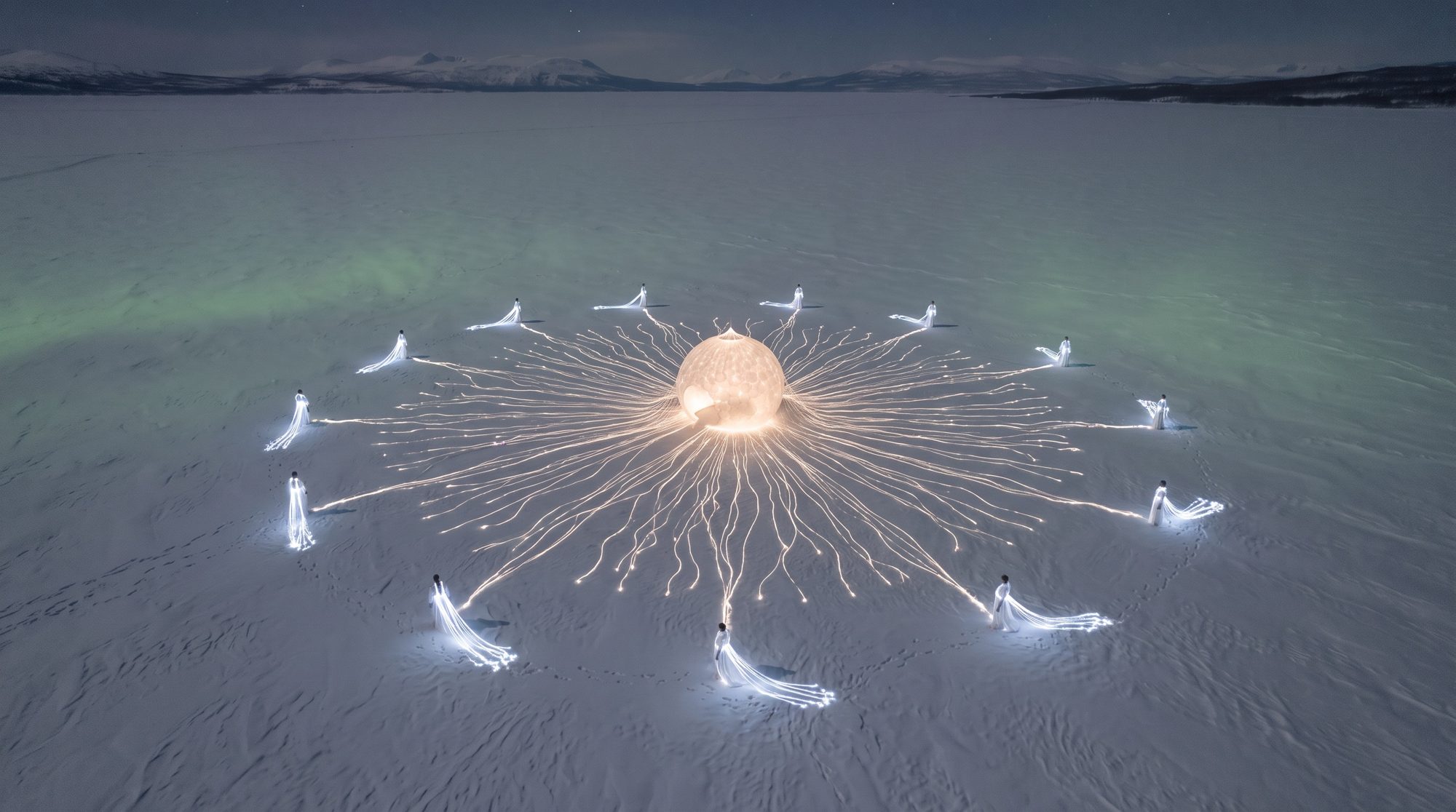
Those outside receive it. The light that runs along the rays and glows in the garments of the walkers is not their own: it comes from the meditators. It is the recorded light of their stillness, kept and returned so that it travels outward across the snow.
Each recorded meditation has its own rhythm, and none is played twice in the same way. When one ends, the light does not switch off: it withdraws slowly, like the afterimage that stays in the eye after looking at a lamp, before the next one begins.
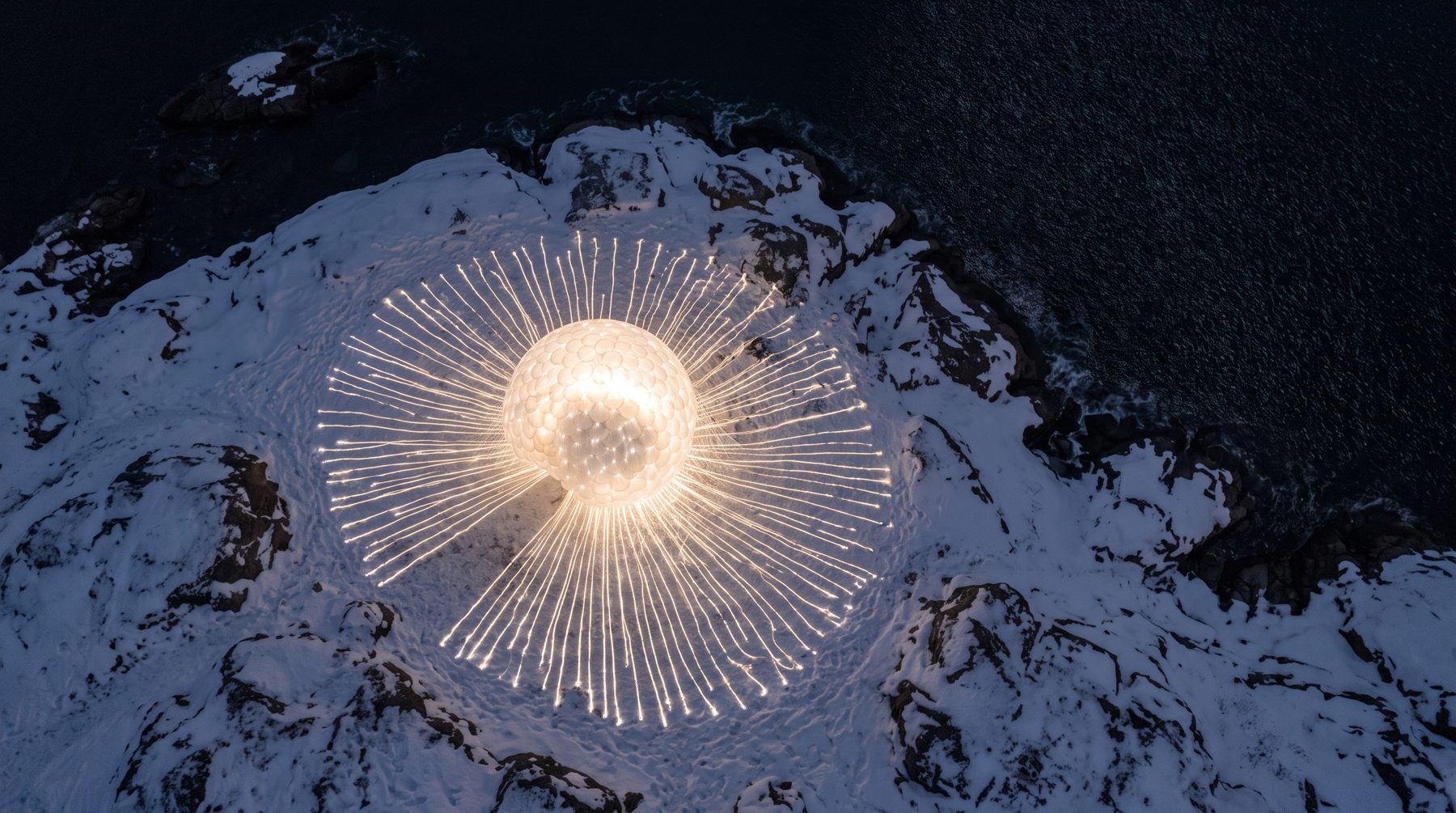
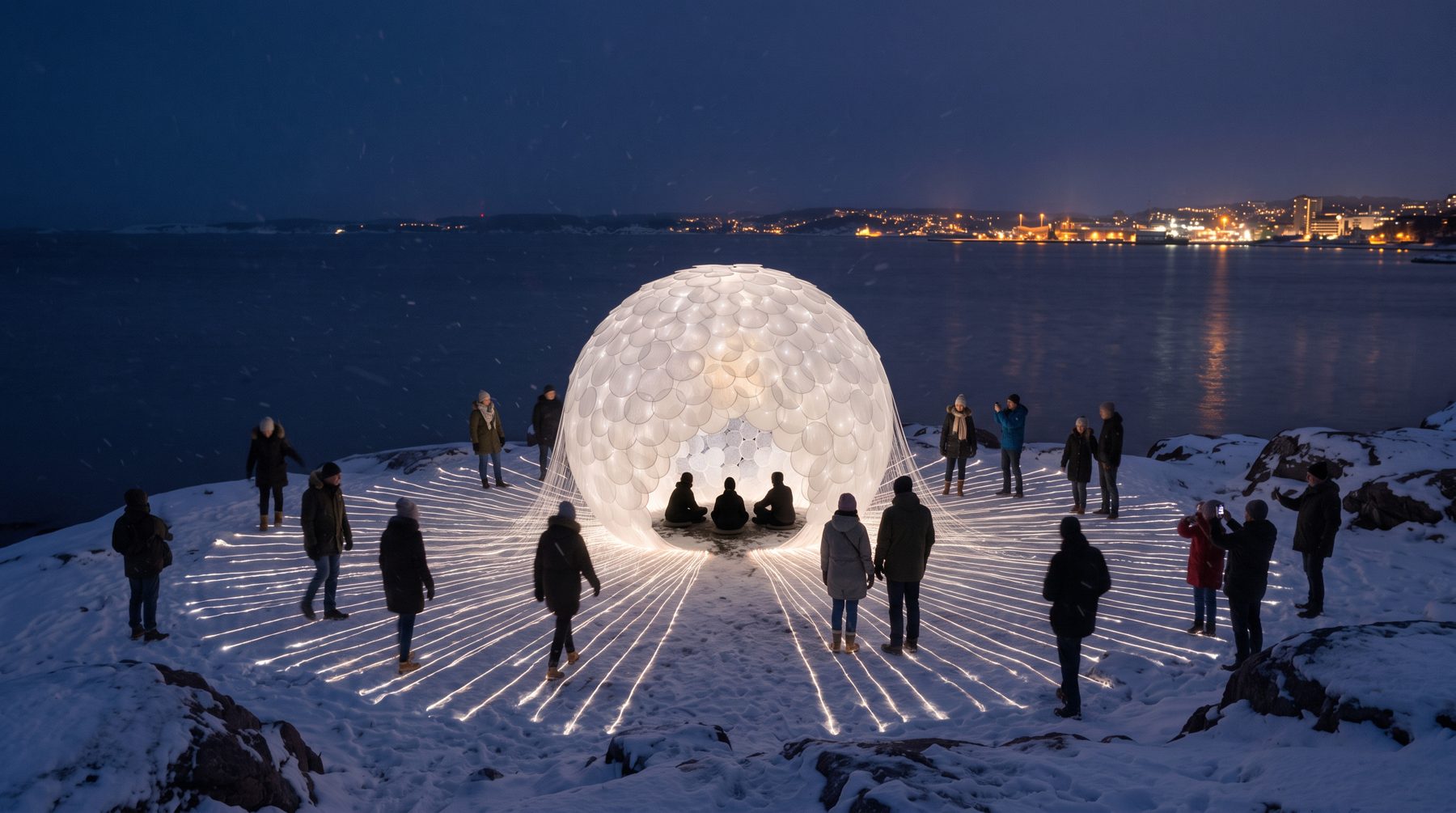
Those who do not enter, walk.
Slowly, in the snow, they circle the shelter carrying a light that is not their own. It is the light of the meditators: their stillness, recorded and returned, travelling out along the rays and into the garments of those who walk. Seen from above they become what the birds are in Sunbirds: bodies orbiting a sun they will never own, carrying its light a little further with each turn. One light, born inside and carried outside: the meditators make it, the walkers pass it on.
My work does not represent light; it sets the conditions in which light may happen, and then withdraws. Here light is an event of relation: it exists only between the veil and the bodies inside it. No one can light the work alone.
Gaston Bachelard wrote that the shell, the nest and the hut are the primal images of dwelling, the place where the body first feels safe enough to dream. Mario Merz made the igloo the emblem of an elementary, nomadic dwelling. Light Cocoon continues that line with one shift: its walls are made of light, and its warmth is the presence of others.
Seen from outside, the sphere is an image among images. Seen from within, it is a room where there is nothing to look at but light. As James Turrell has shown, light can stop revealing things and become the thing perceived; here that perception is not solitary but held in common.
In a culture of constant movement, sitting still is almost a form of resistance. The work responds only to it. Stillness is not passivity: it is the condition in which the dome, and perhaps the person, becomes transparent.
Goethe observed that after looking at a bright form the eye goes on producing it in its complementary colour: the eye itself makes light. When the visitors leave, the sphere fades like an afterimage. This trace, what light leaves in us and what we leave in light, is the subject of my doctoral research Huella de Luz at the Universidad Miguel Hernández.
Buddhist philosophy, which I have studied for many years in Asia, describes every phenomenon as arising from conditions rather than existing on its own; contemporary physics reads the world as a web of relations. The shelter of light is a small, literal model of both: a light that exists only because certain people, in a certain place, are there together.
Project in development, 2026–2027. Images are visualisations of the project, not documentation of a finished work. Concept, memoir and visualisations filed with the Spanish Intellectual Property Registry (files 00765-03289749 and 00765-03289754), October 2026.