Pleione · 2026–2027
Susana
Mazzarino
Bodies that produce their own light. A series in painting, textile light sculpture and projection.
For thirty-seven years I have worked with a single subject: light. I do not depict it; I set the conditions in which it may occur, and then withdraw.
Susana Mazzarino (b. 1969) studied painting at the Universidad Complutense de Madrid and holds a Diploma of Advanced Studies from the Universidad Miguel Hernández, where she is now a doctoral candidate in the PhD Programme in Artistic Creation with the project Huella de Luz (Trace of Light): what light leaves in the one who perceives it, and what a person leaves in light.
Since 1988 she has followed light across wood and canvas, the moving body and, since 2021, the luminous depth of the screen. Since 2025 it has left the wall to become textile light sculpture and installation. In parallel she built a twenty-five-year international career as a fashion and footwear designer and creative director between Europe and Asia — the source of the textile knowledge that now shapes her sculptures, and of LIGHTLIVE®, her registered line of wearable light.
Her work has been shown at the MAMAM in Recife, the MEAM in Barcelona, the Chengdu Museum of Contemporary Art, Palazzo Albrizzi-Capello in Venice and the Carrousel du Louvre in Paris.
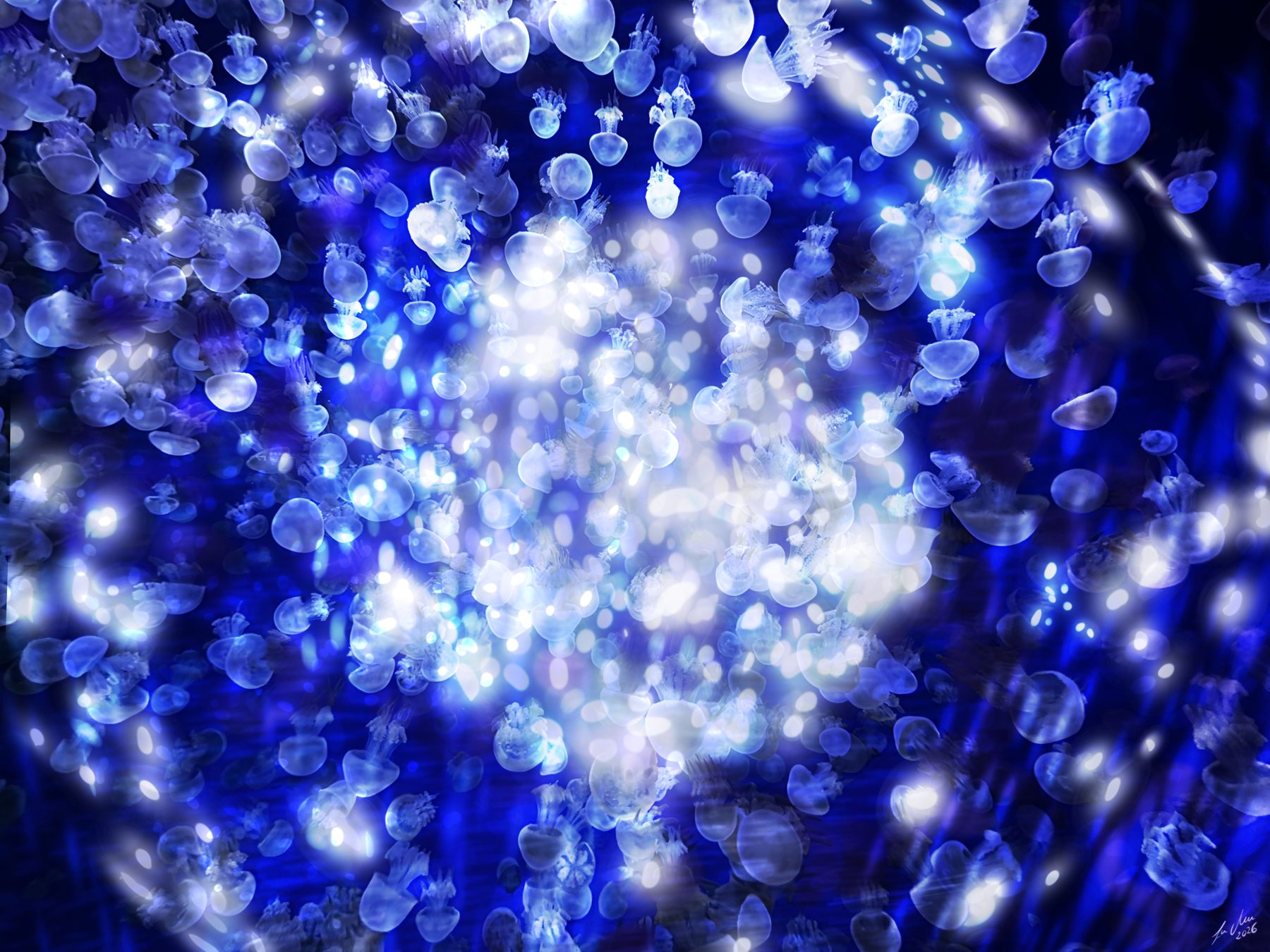
Almost all the light that life produces on this planet is born in the dark of the sea. Below two hundred metres, where sunlight fails, nearly every light is made by the animals themselves: medusae, ctenophores, plankton, the crowd of bathyal life.
Pleione — named after the mother of the Pleiades, a daughter of the sea — takes this light as its subject. On a dark ground, points of light are at once a night sky and a luminous sea; the series takes that undecidable coincidence as its structure rather than its metaphor. The paintings are ordered as a descent, from the lit surface to the bathyal threshold where only the light that bodies make for themselves remains.
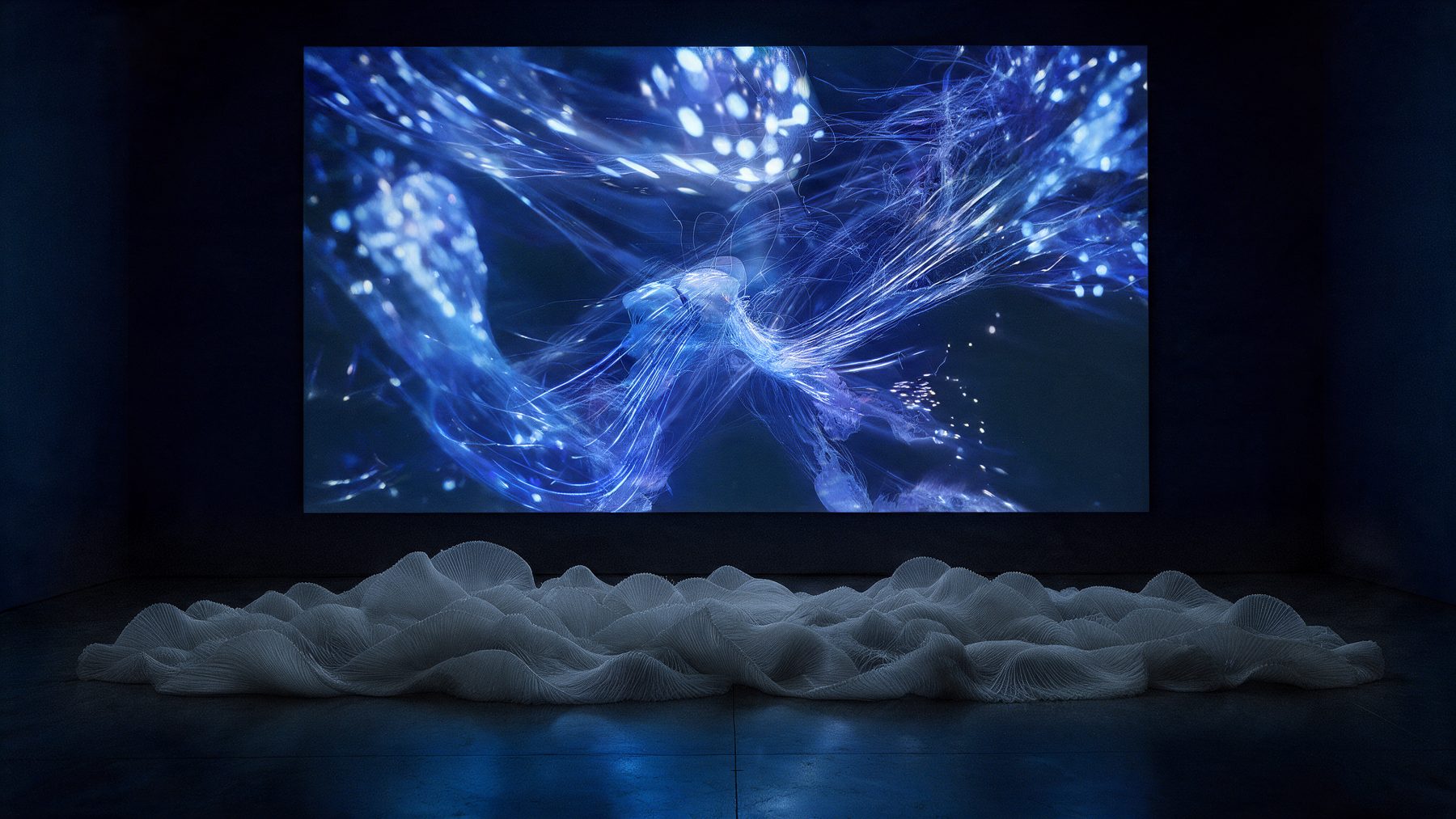
The work exists in three states that carry the same title: a painting, a textile light sculpture, and the moving image of the painting projected over both. Interior light and exterior light are one substance seen from two sides.
Each stage translates the same luminous behaviour — a point, a trail, a field, an arc, a pulse — into a new material.
Every work begins in a photograph taken by the artist: bioluminescent organisms, crystals, luminous bodies. Their form and the way they emit light become the brief for a painting and a sculpture.
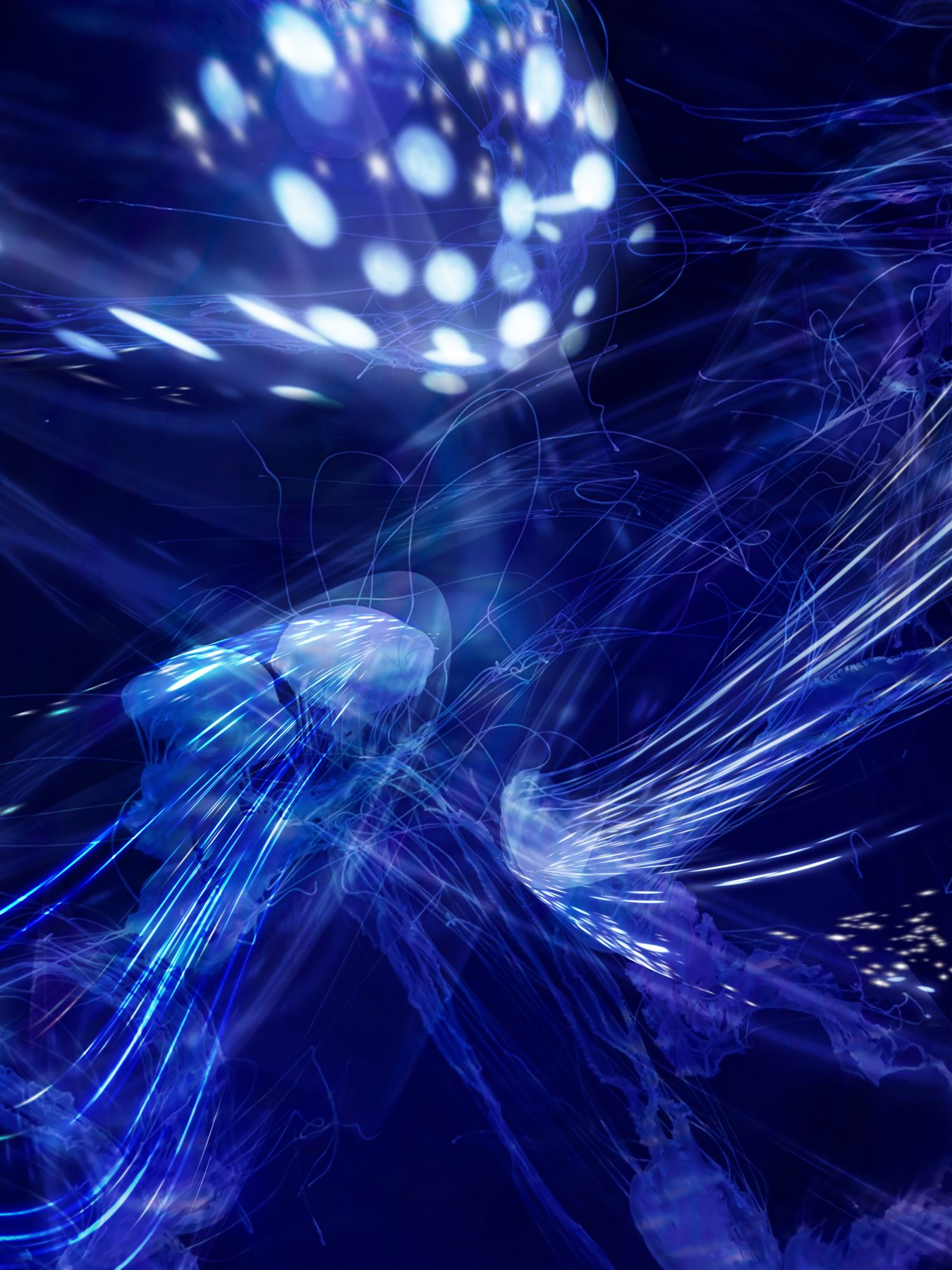
The image is built stroke by stroke on iPad Pro with Apple Pencil, in transparent layers. No form is allowed to close: light is held as an event, not an object.
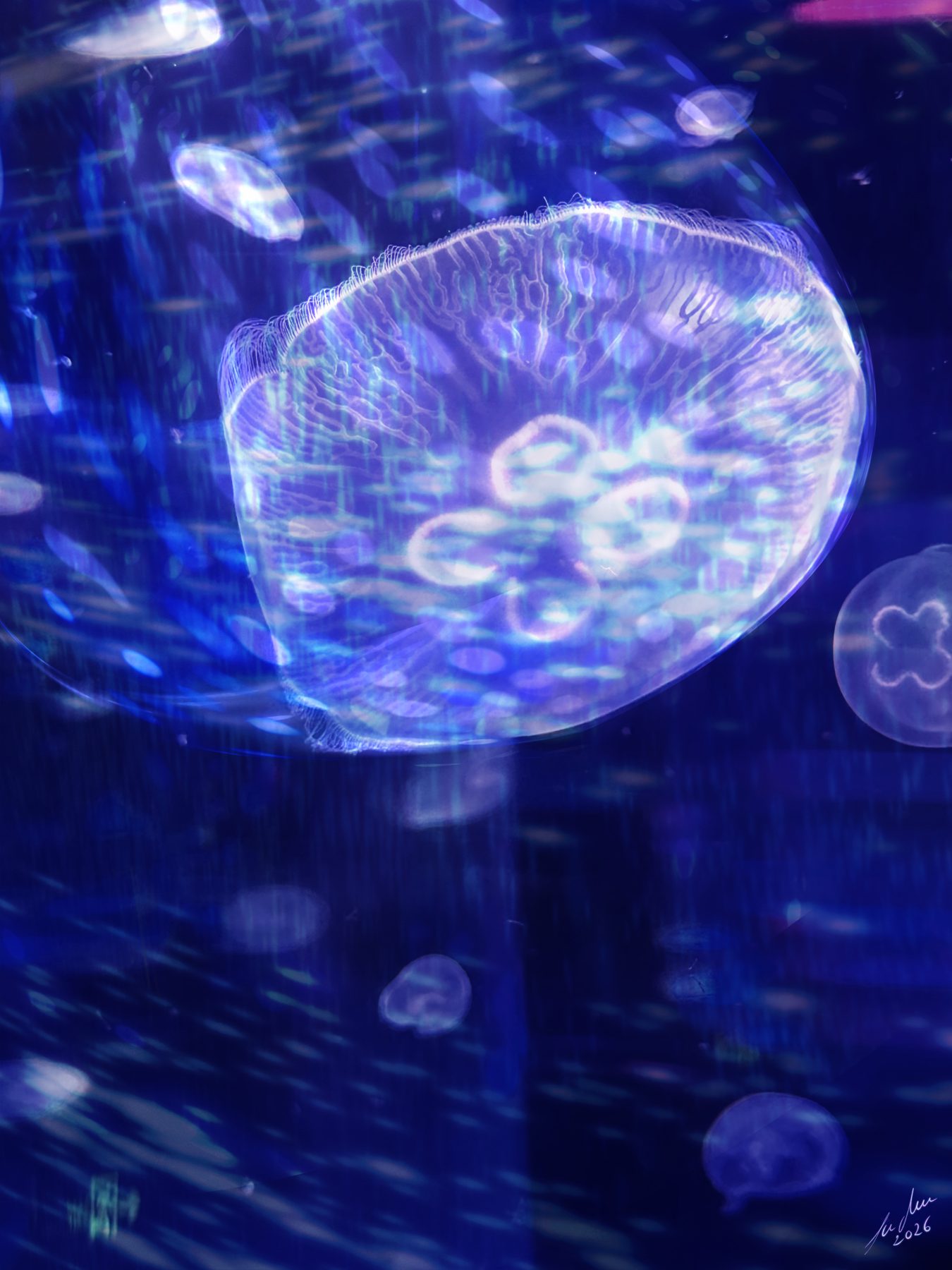
Printed in archival pigment inks on Hahnemühle Daguerre Canvas or Canson Infinity ProCanvas Matt and finished by hand in acrylic with fluorescent and phosphorescent paints. Each work is unique and signed, with double certificate and double Hahnemühle seal.
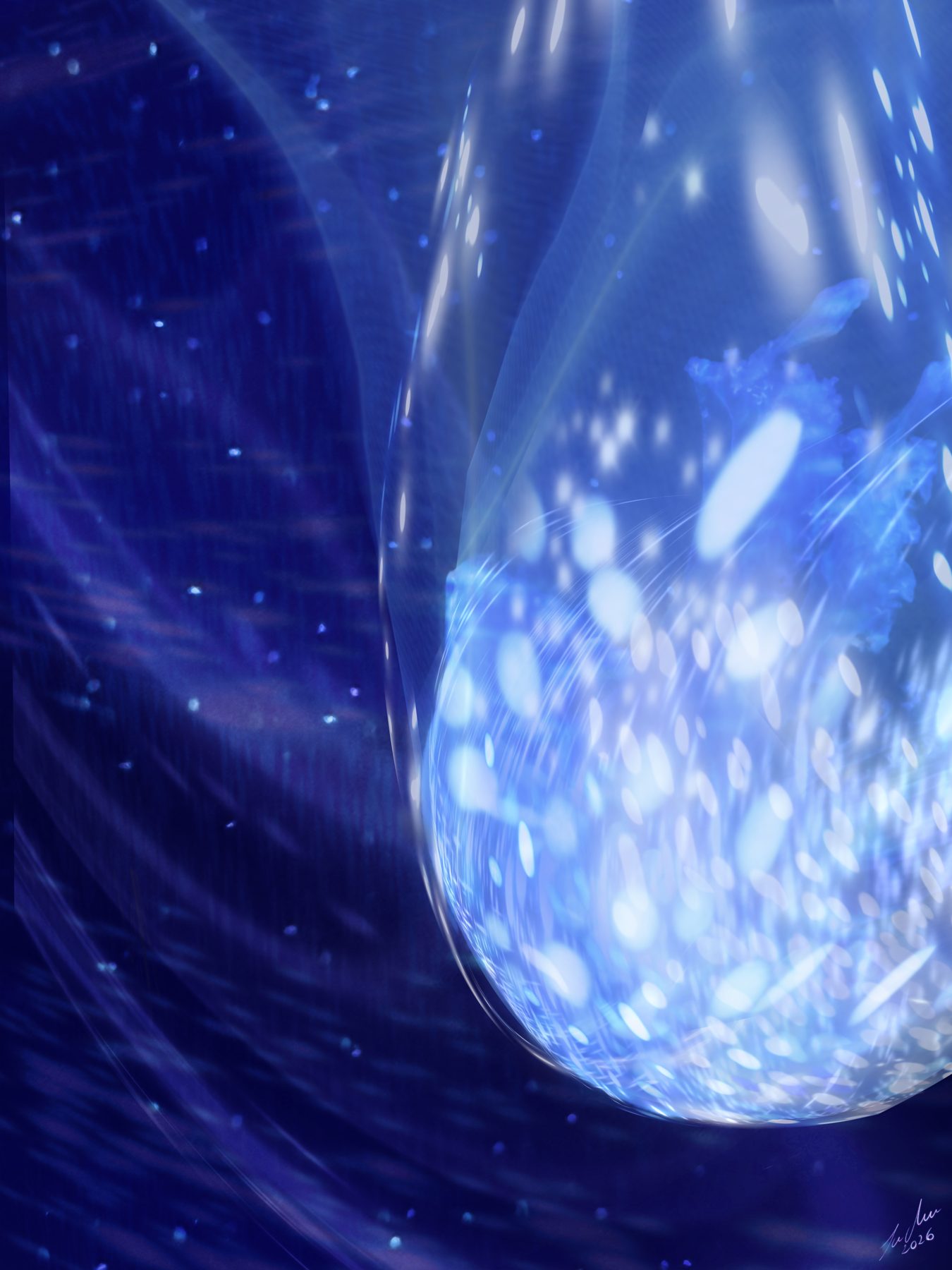
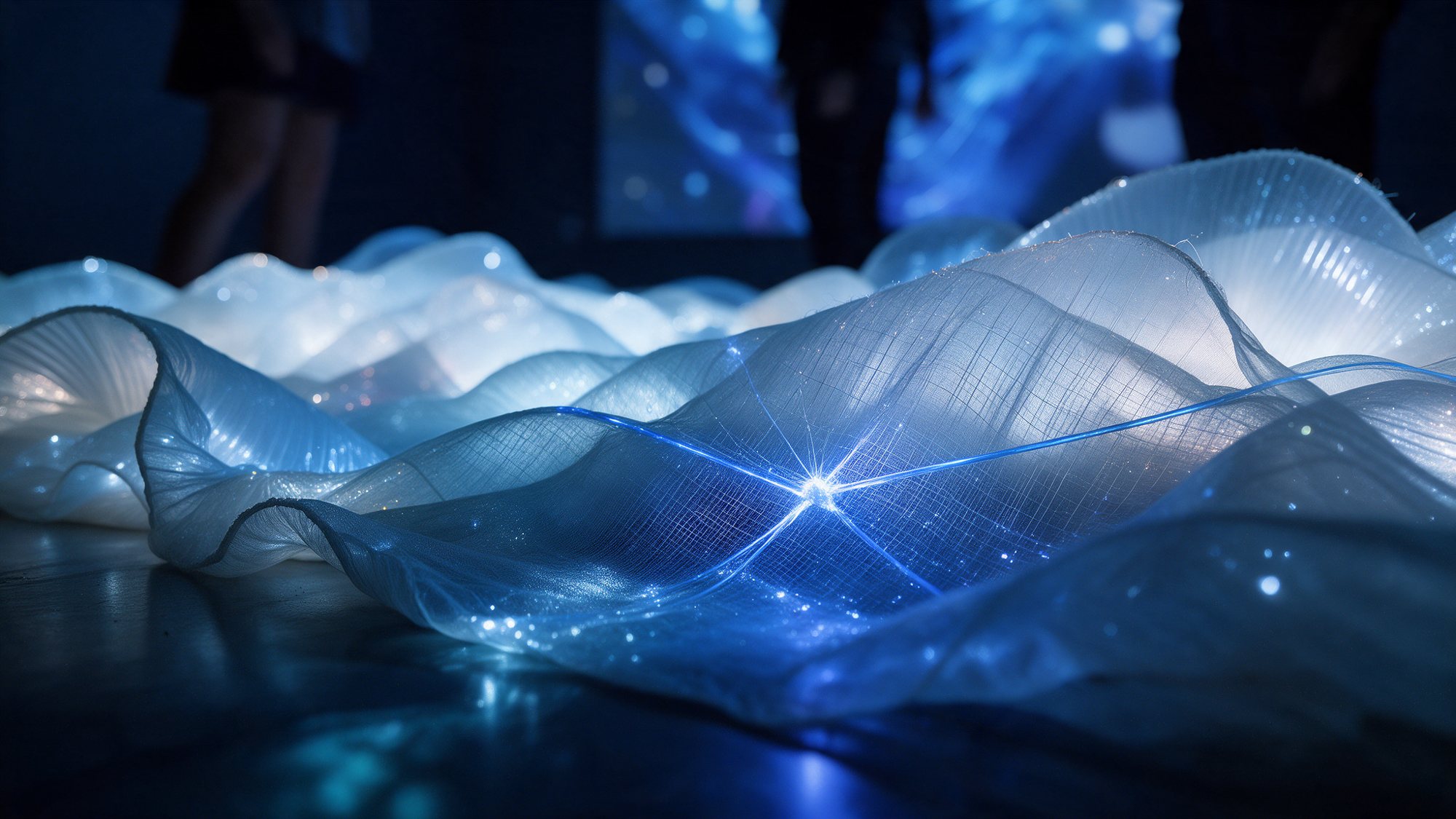
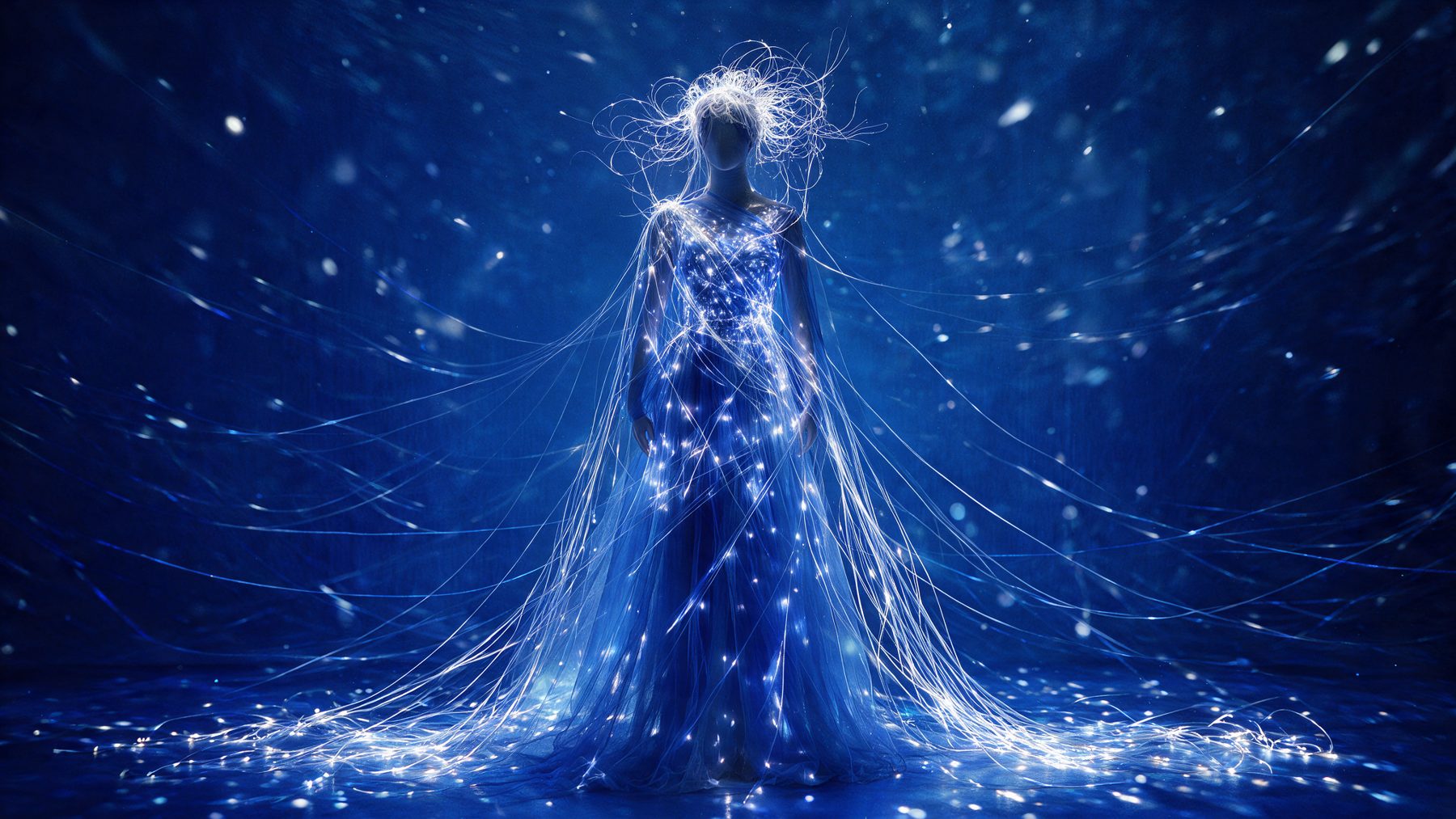
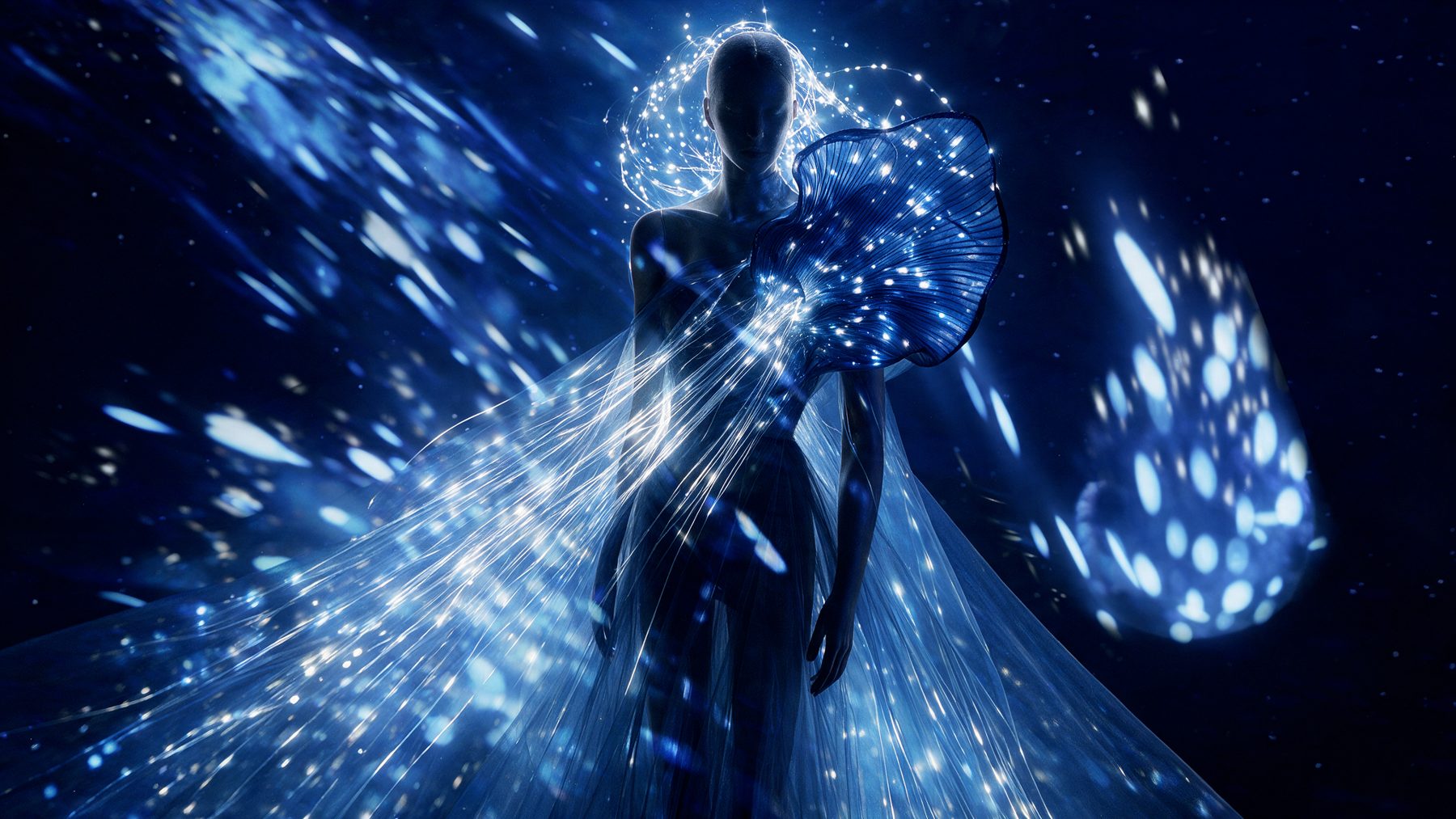
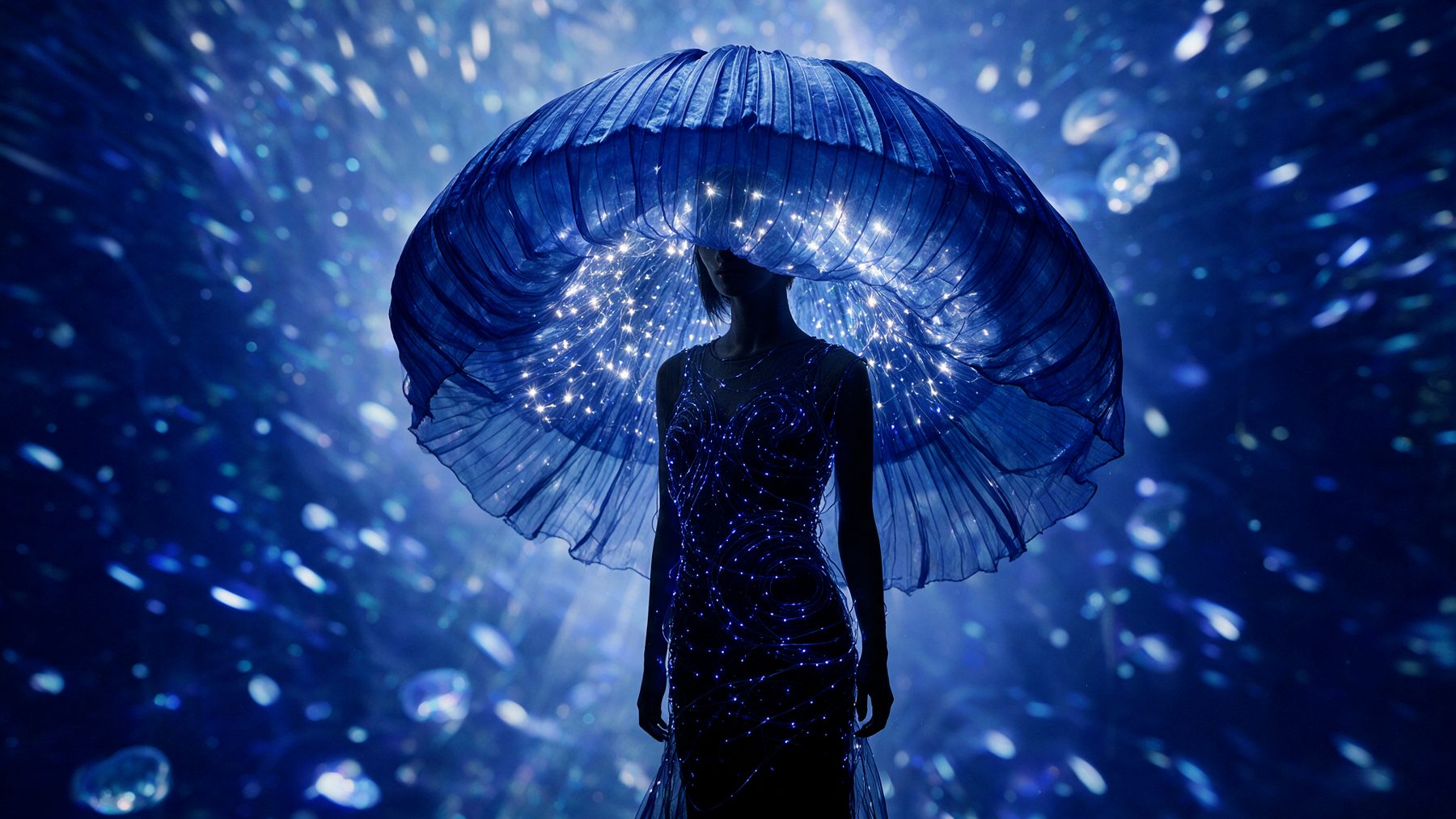
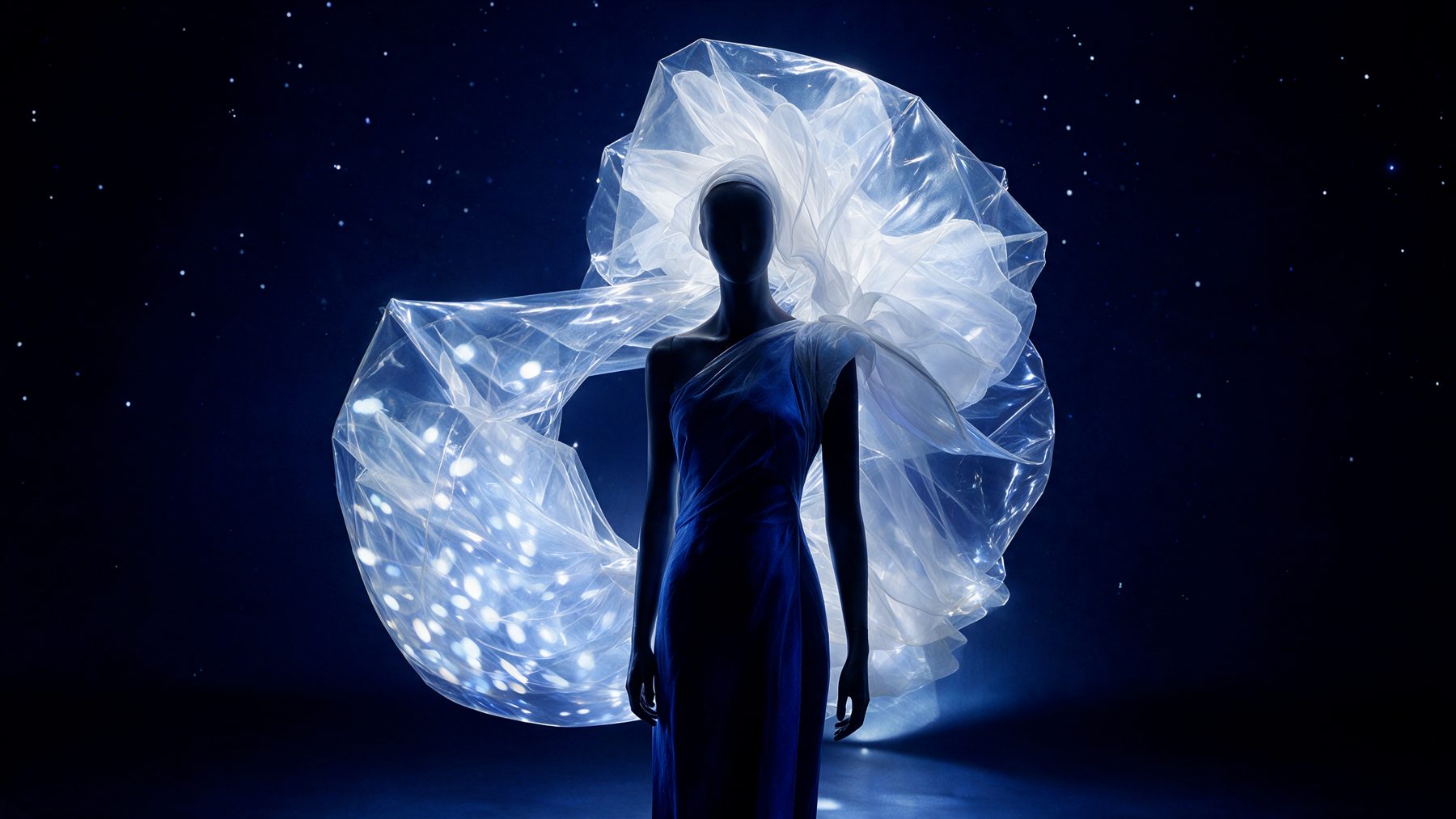
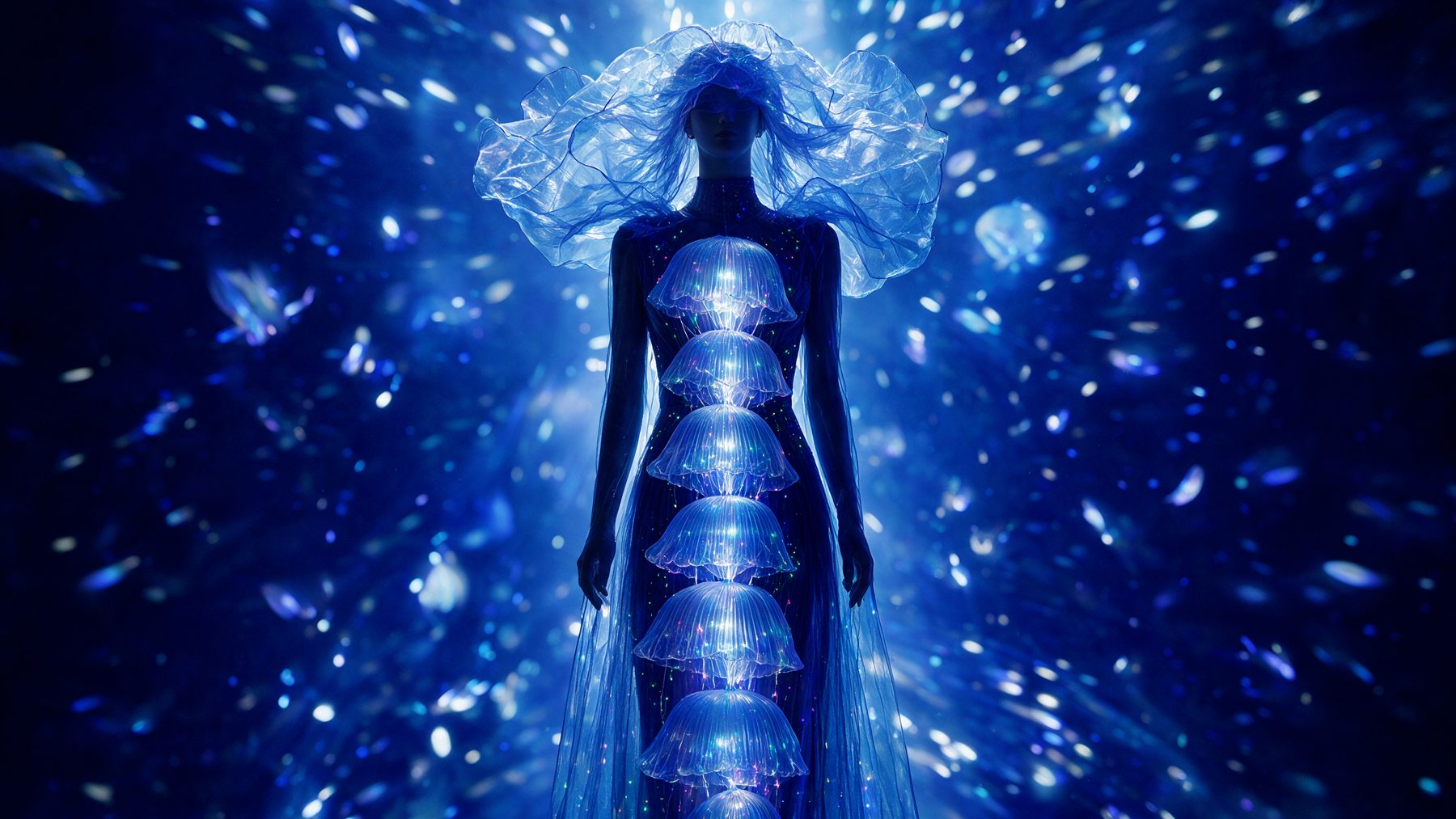
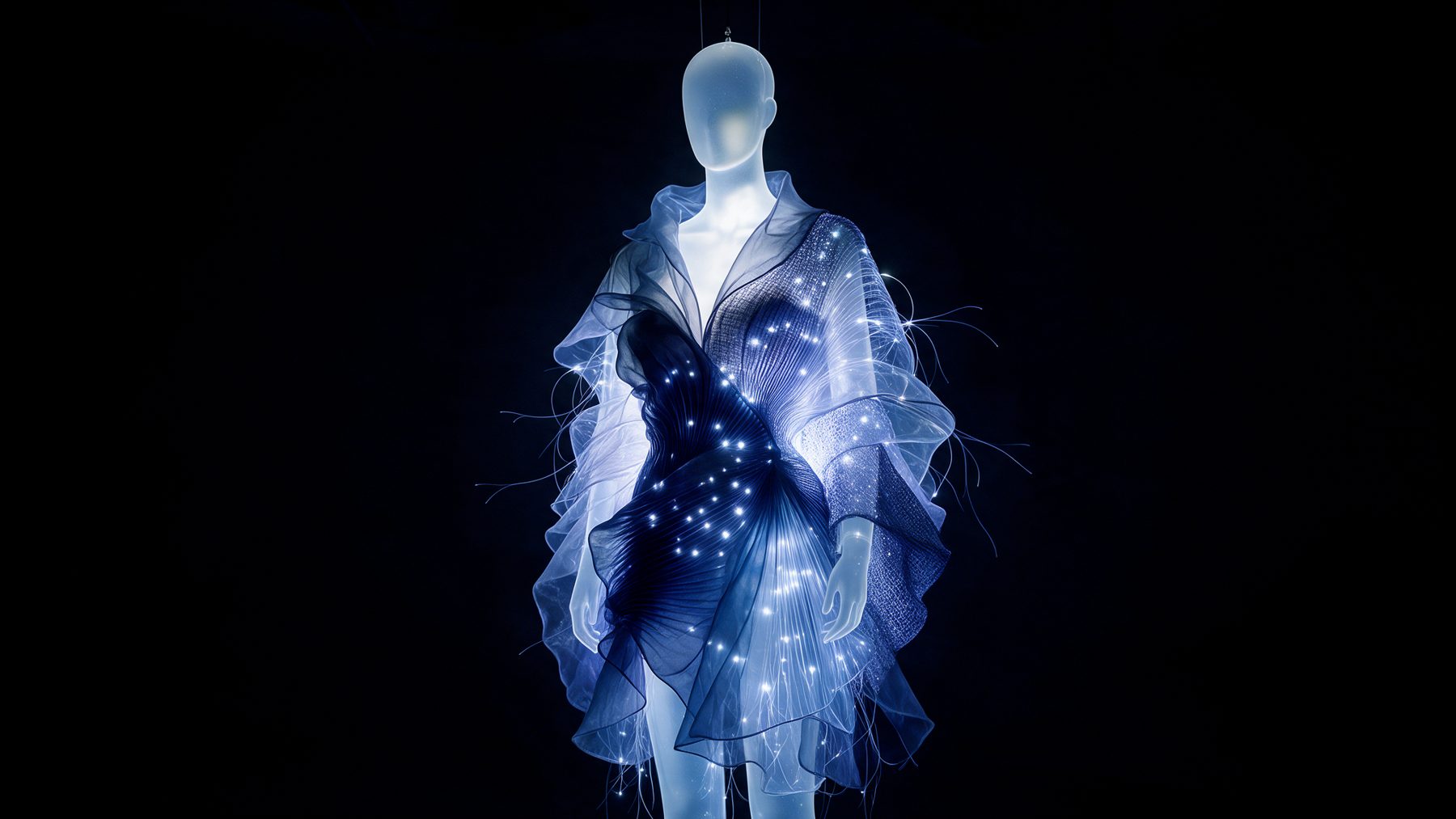
The painting becomes a textile light sculpture: silk gazar, organza and tulle threaded with woven optical-fibre fabric and side-emitting fibre, lit only from within.
The painting is animated and projected over sculpture, wall and canvas in one slow cycle of six to eight minutes. Three states, one work.
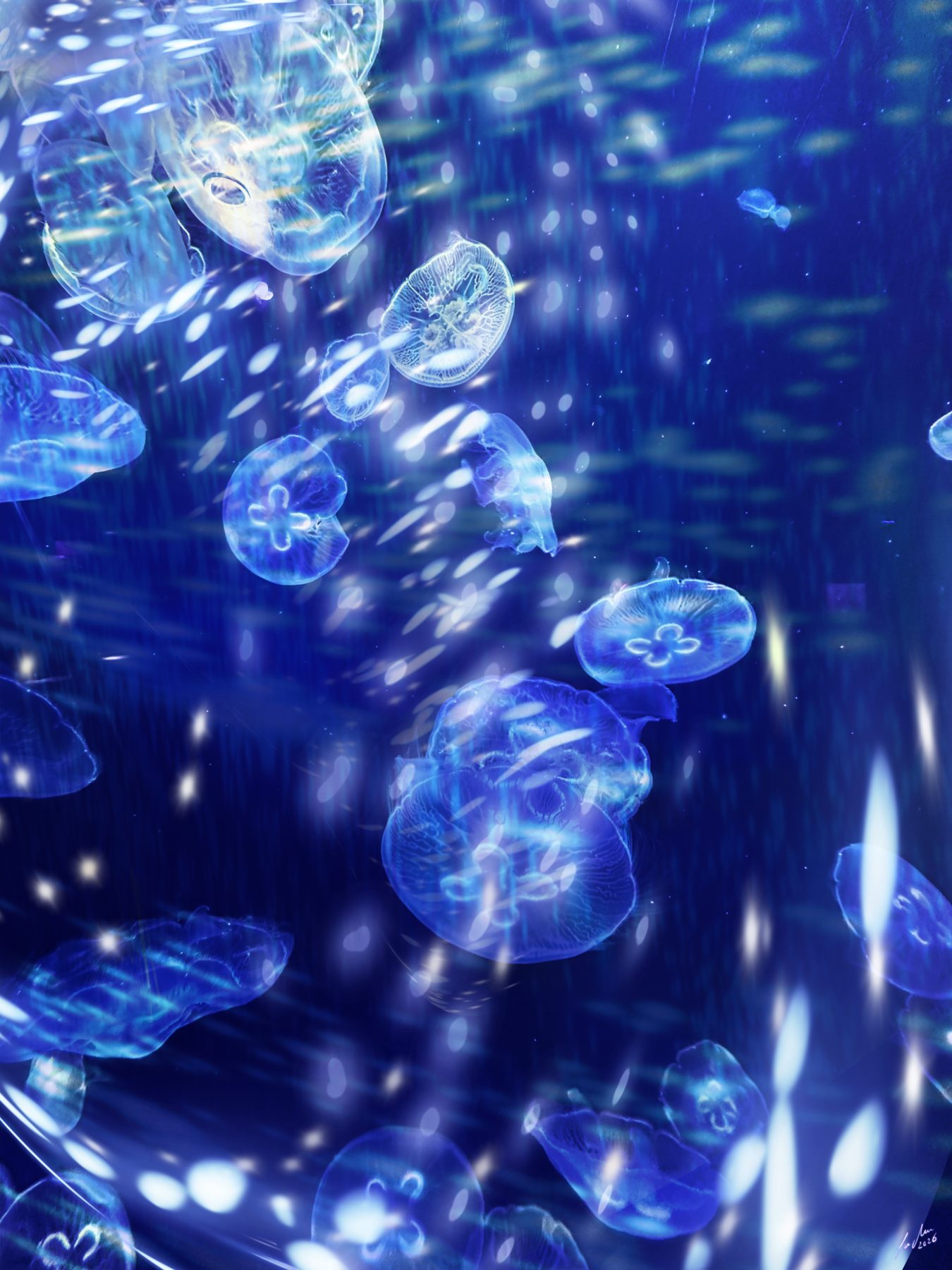
Photograph and digital painting, printed in archival pigment inks on Hahnemühle Daguerre Canvas or Canson Infinity ProCanvas Matt, mounted on a wooden stretcher and finished by hand in acrylic with fluorescent and phosphorescent paints. Unique works, signed, with double certificate: the artist's certificate and the Hahnemühle certificate of authenticity with double seal and registration number. 120 × 90 cm unless stated.
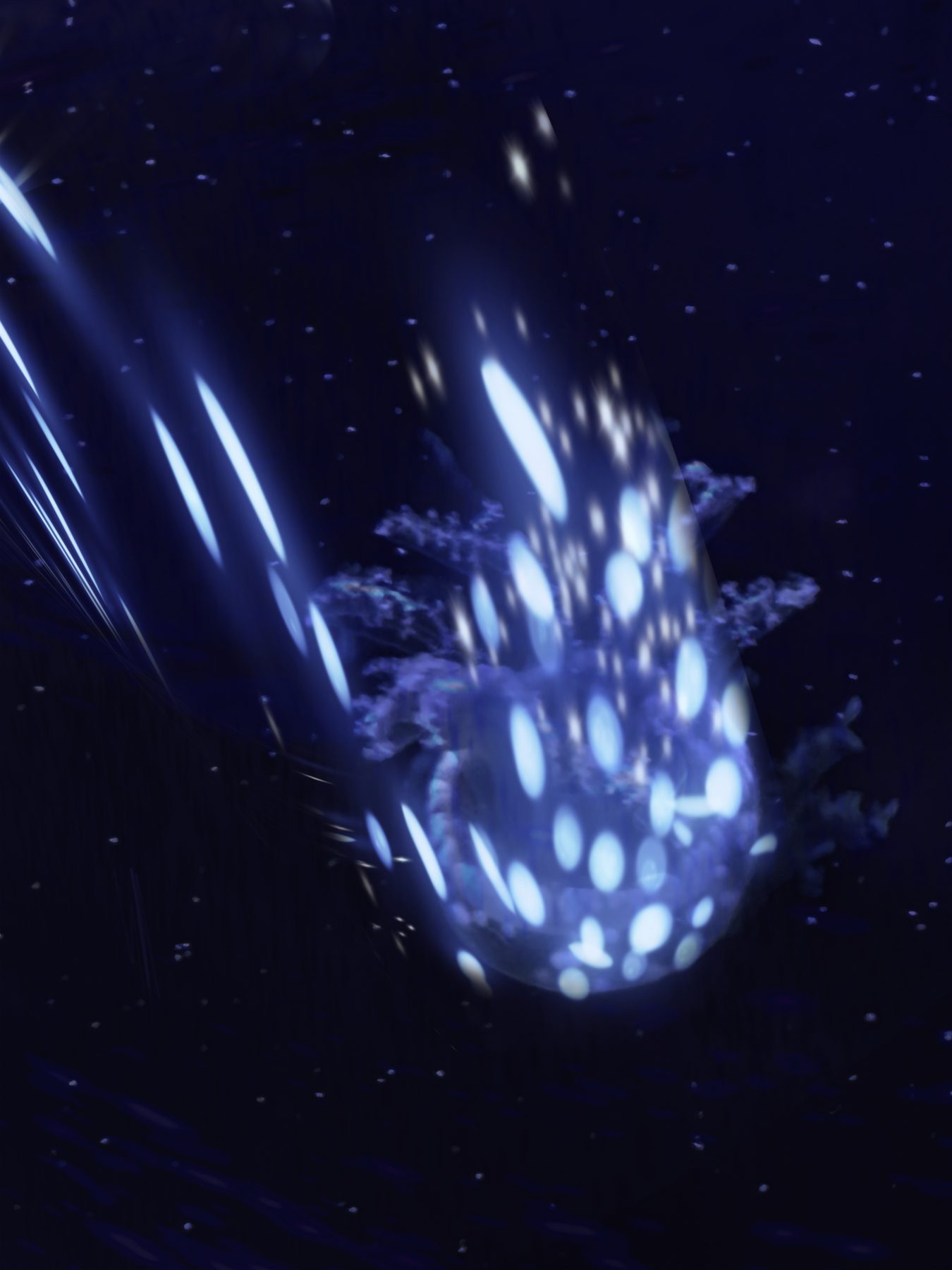
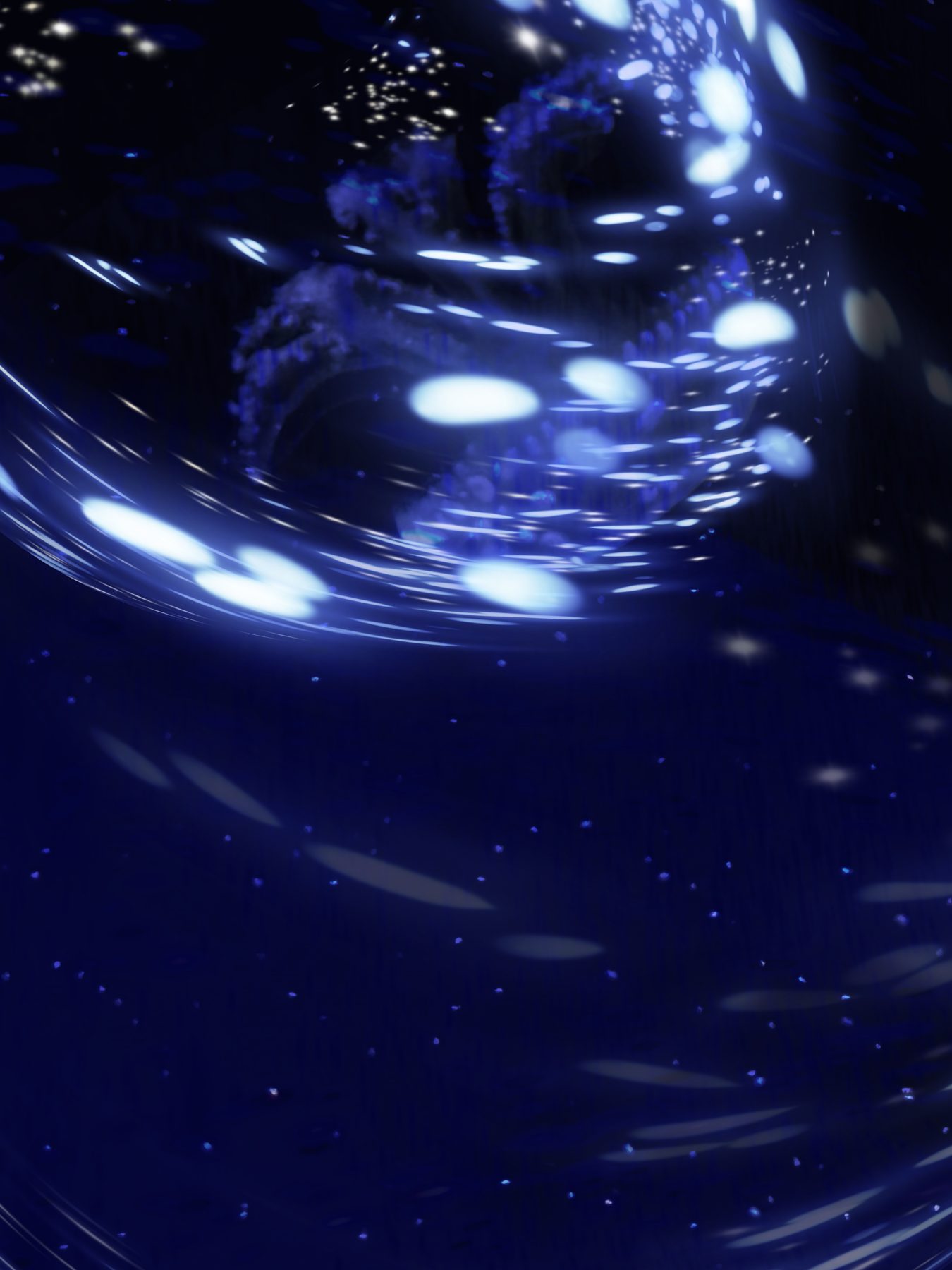
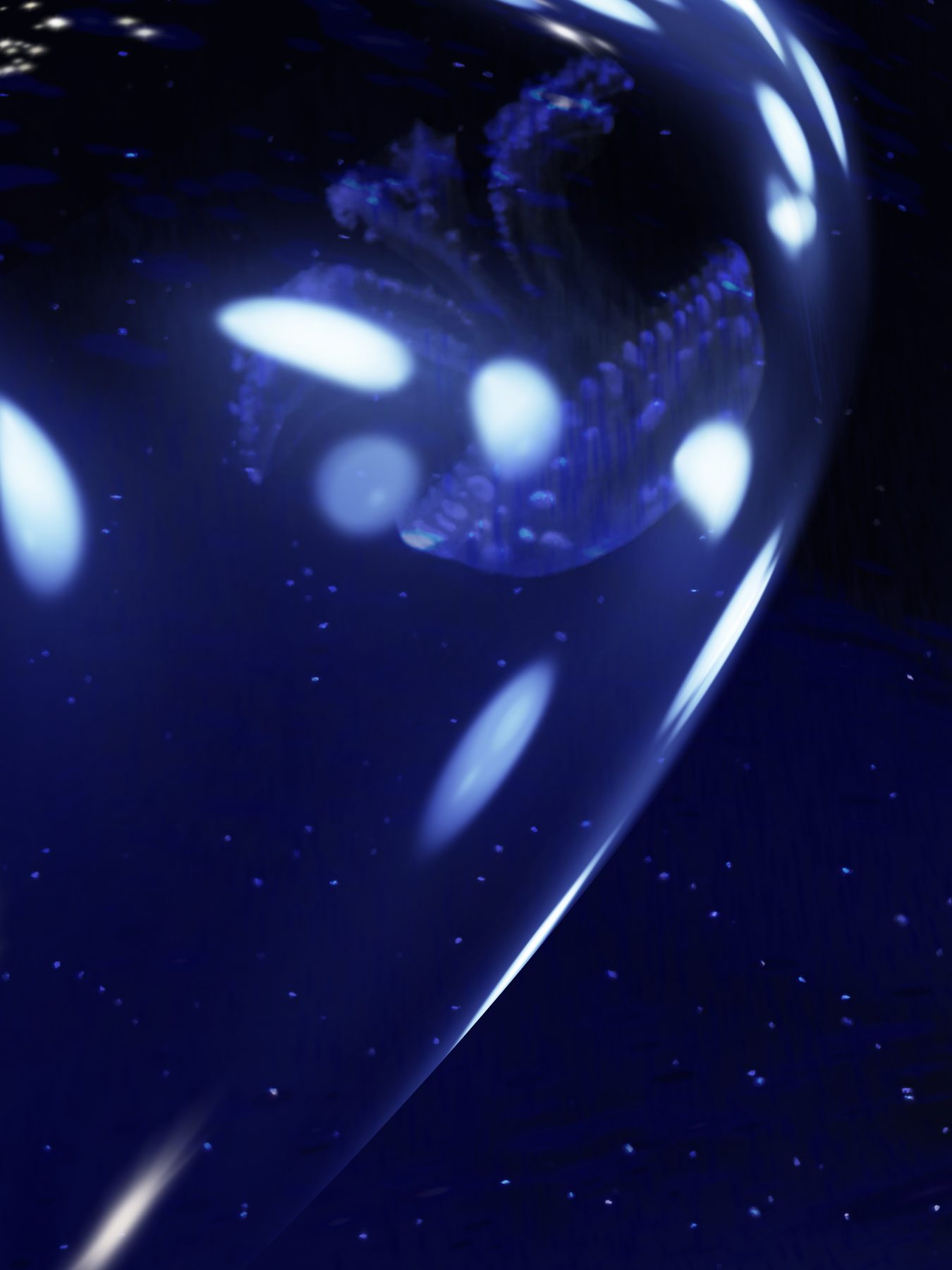
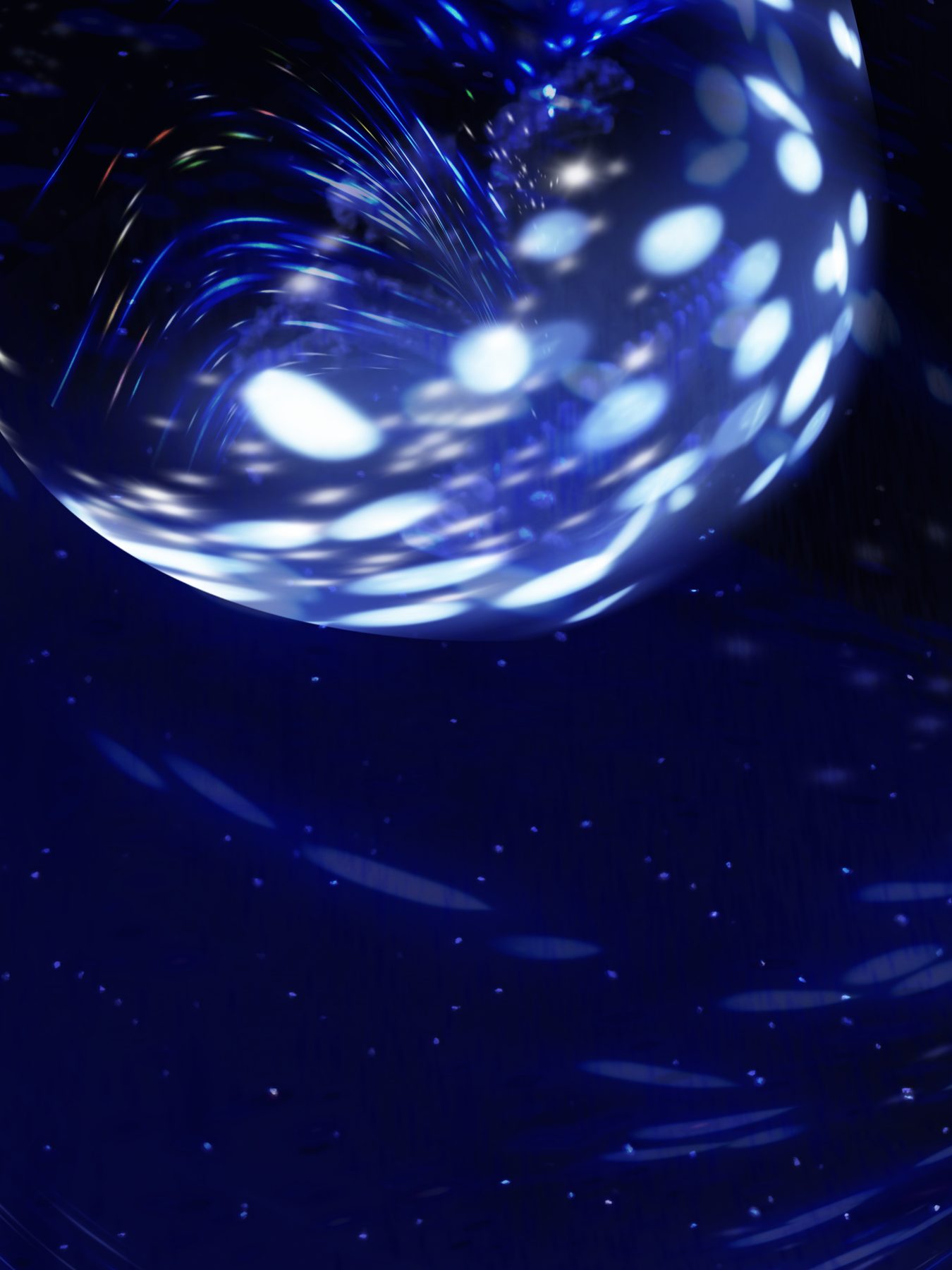
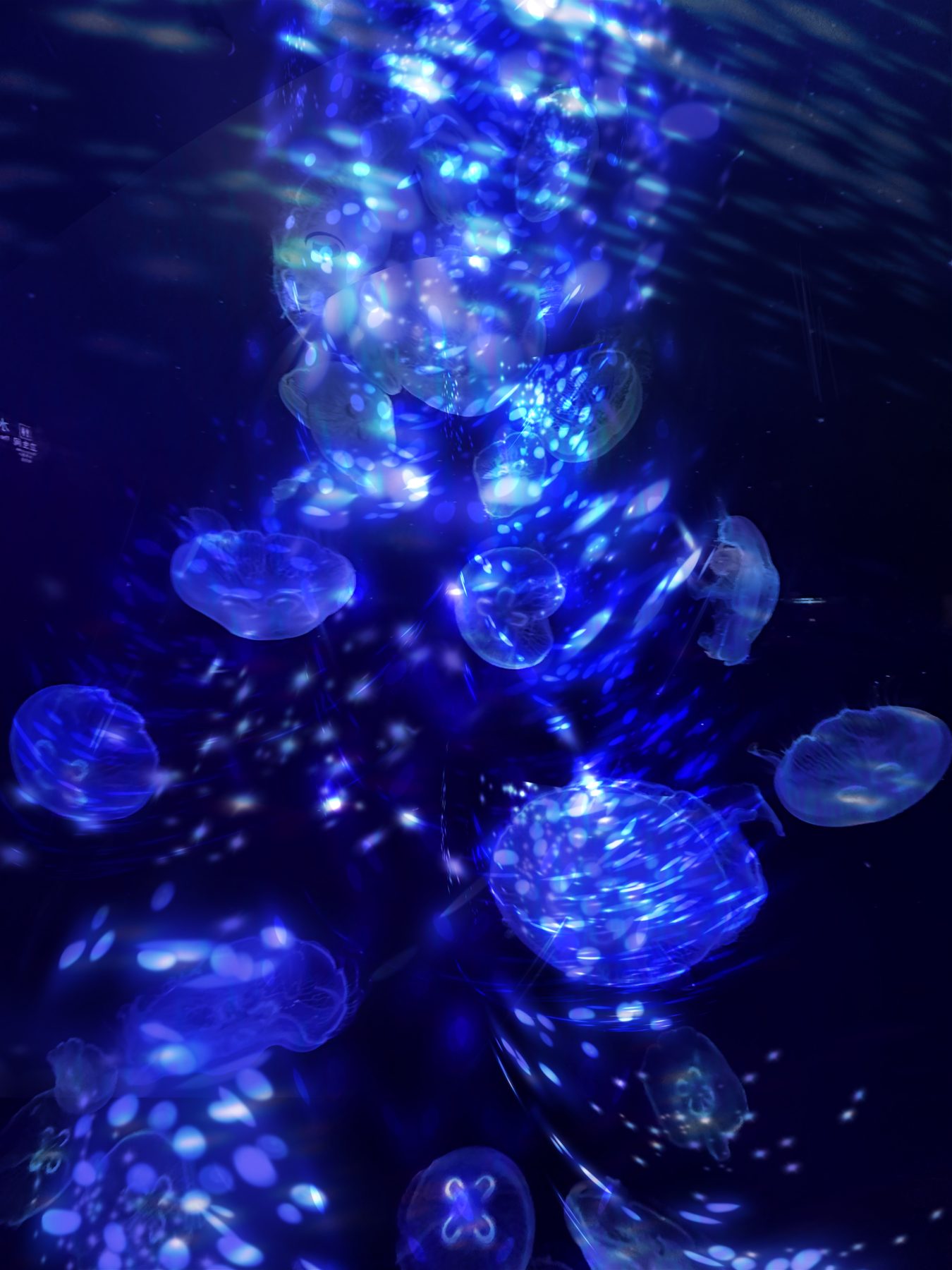
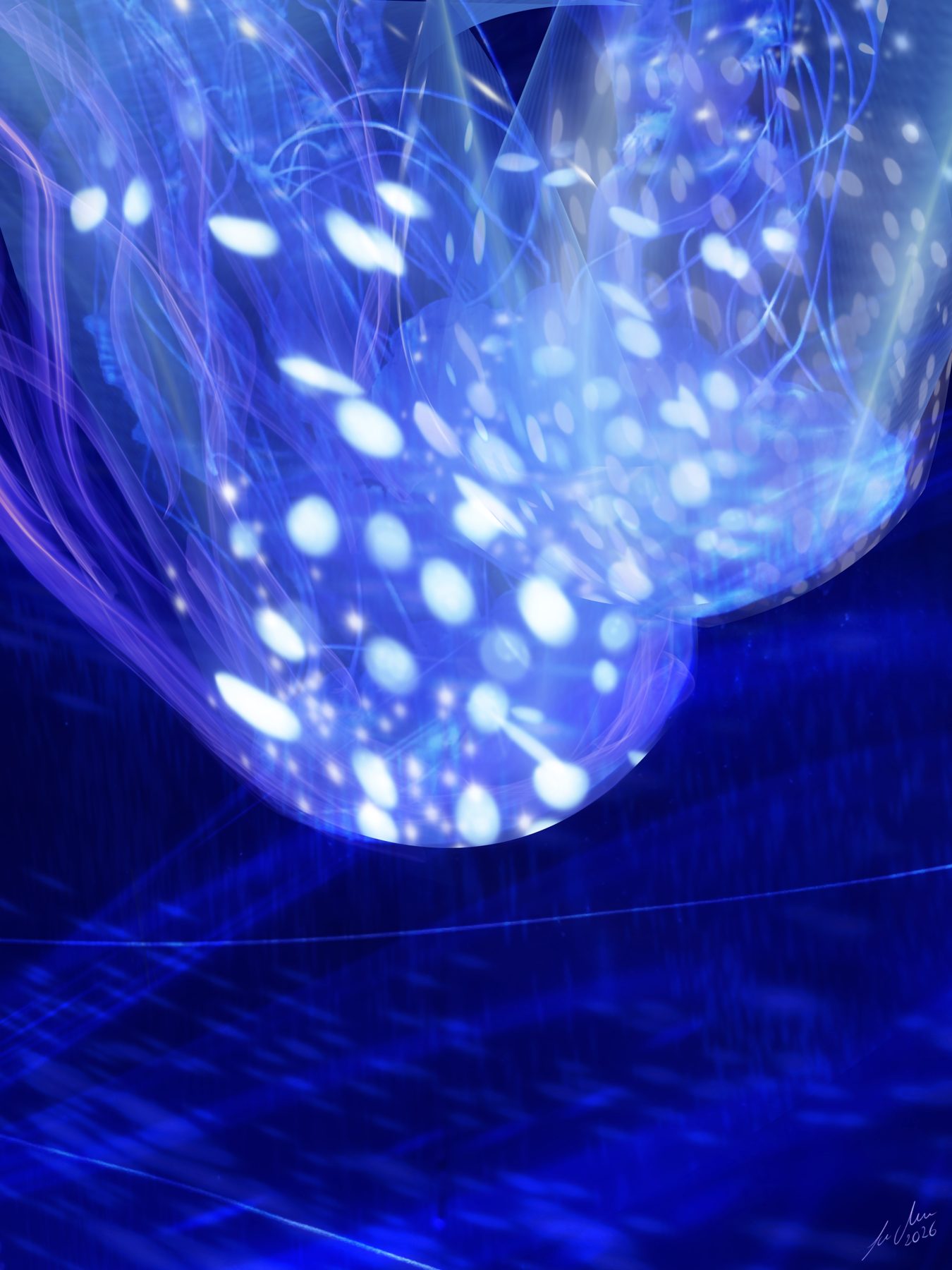
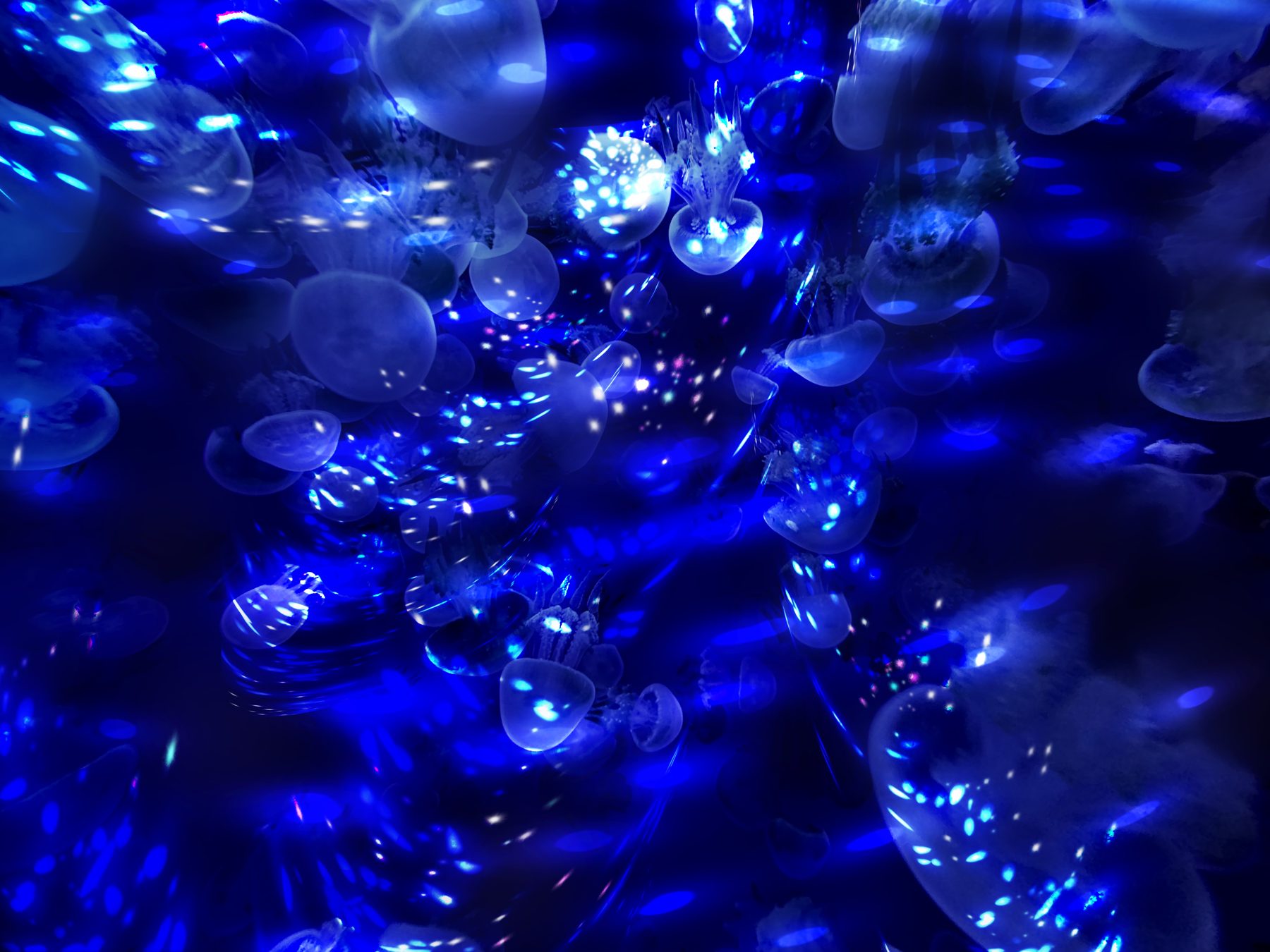
Each painting also exists in time. Its moving image is projected in the exhibition over the painting and over the sculpture made from it.
A featureless translucent figure, lit from within, is dressed in silk gazar, silk organza and tulle and threaded with woven optical-fibre fabric and side-emitting optical fibre driven by LED. No external light touches the works: the light is not applied to the surface, it arises from its structure — a fold, a weave, a density of filaments. Sixteen sculptures for the Museu Tèxtil de Terrassa, 2027.
From painting and sculpture to a living installation: the reef of Pleione becomes a space the public enters and keeps alive.
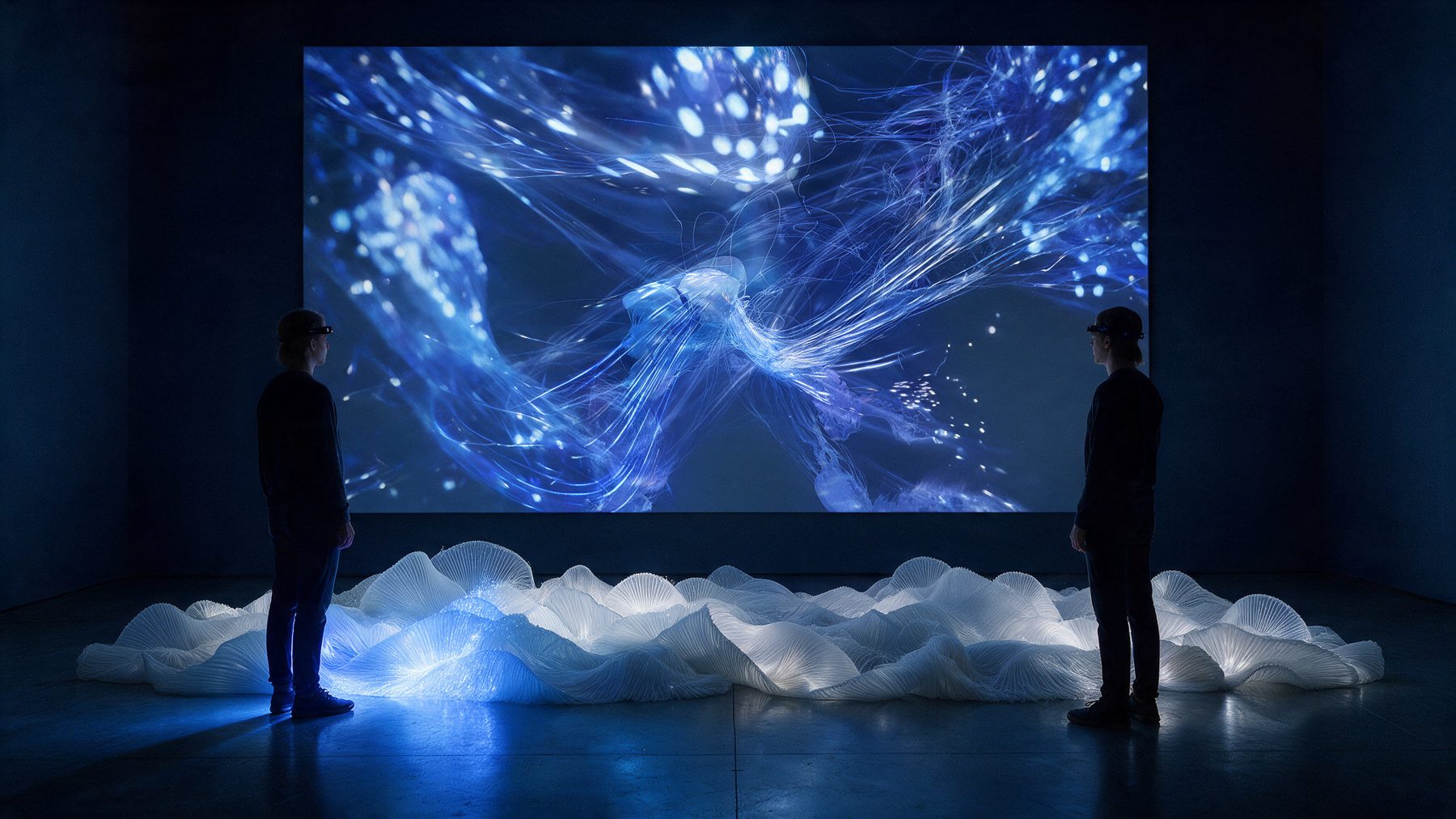
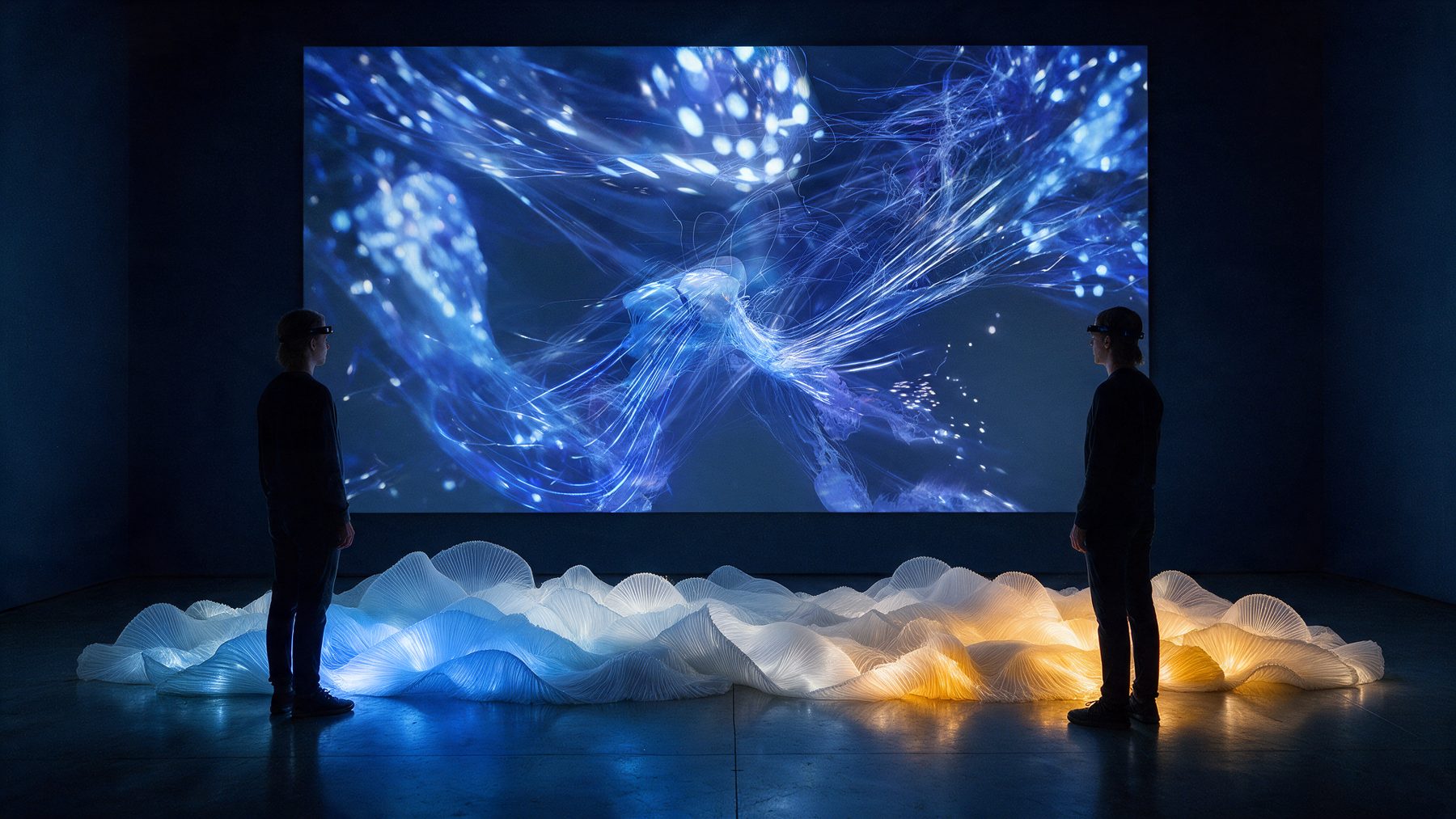
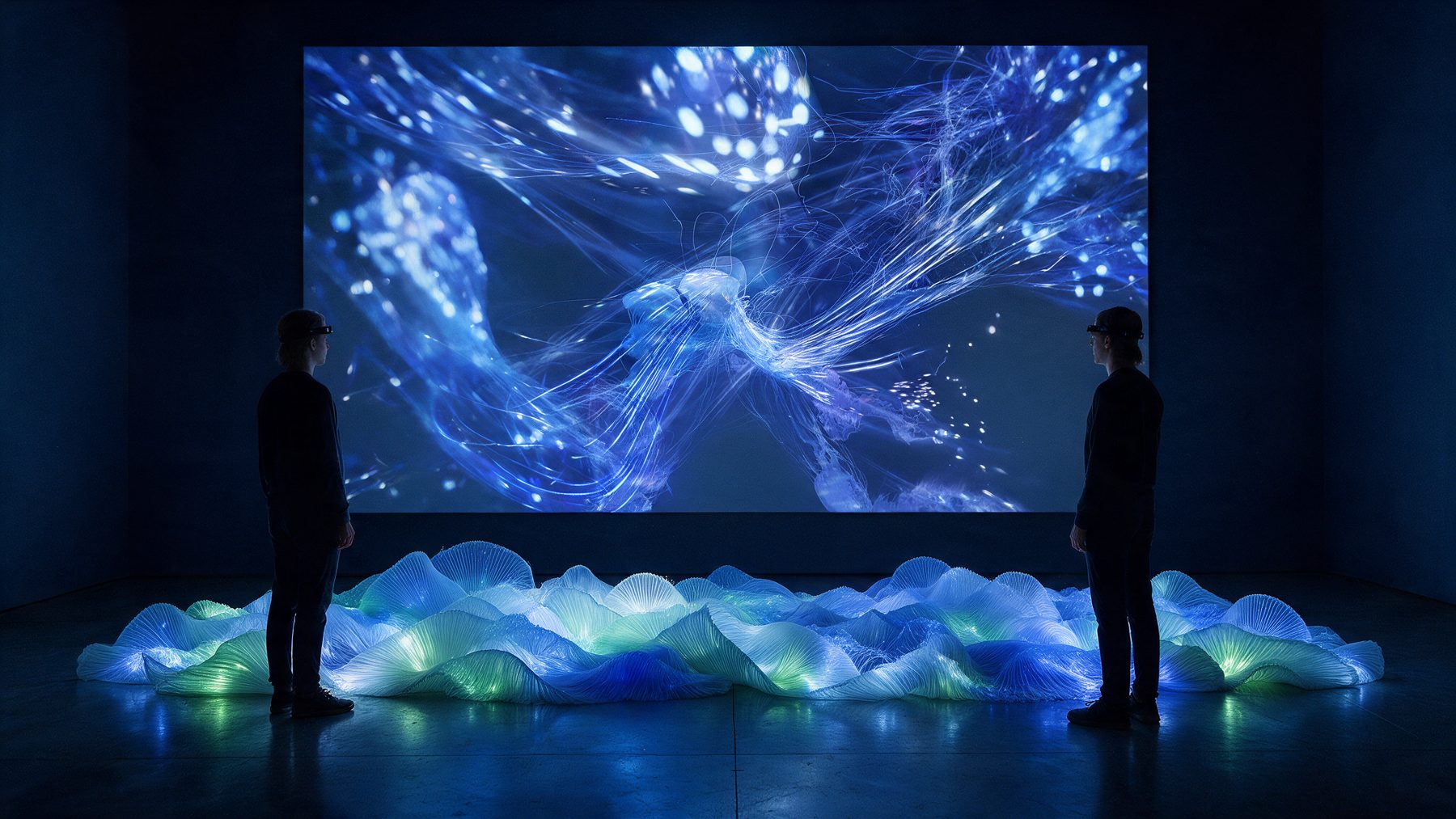
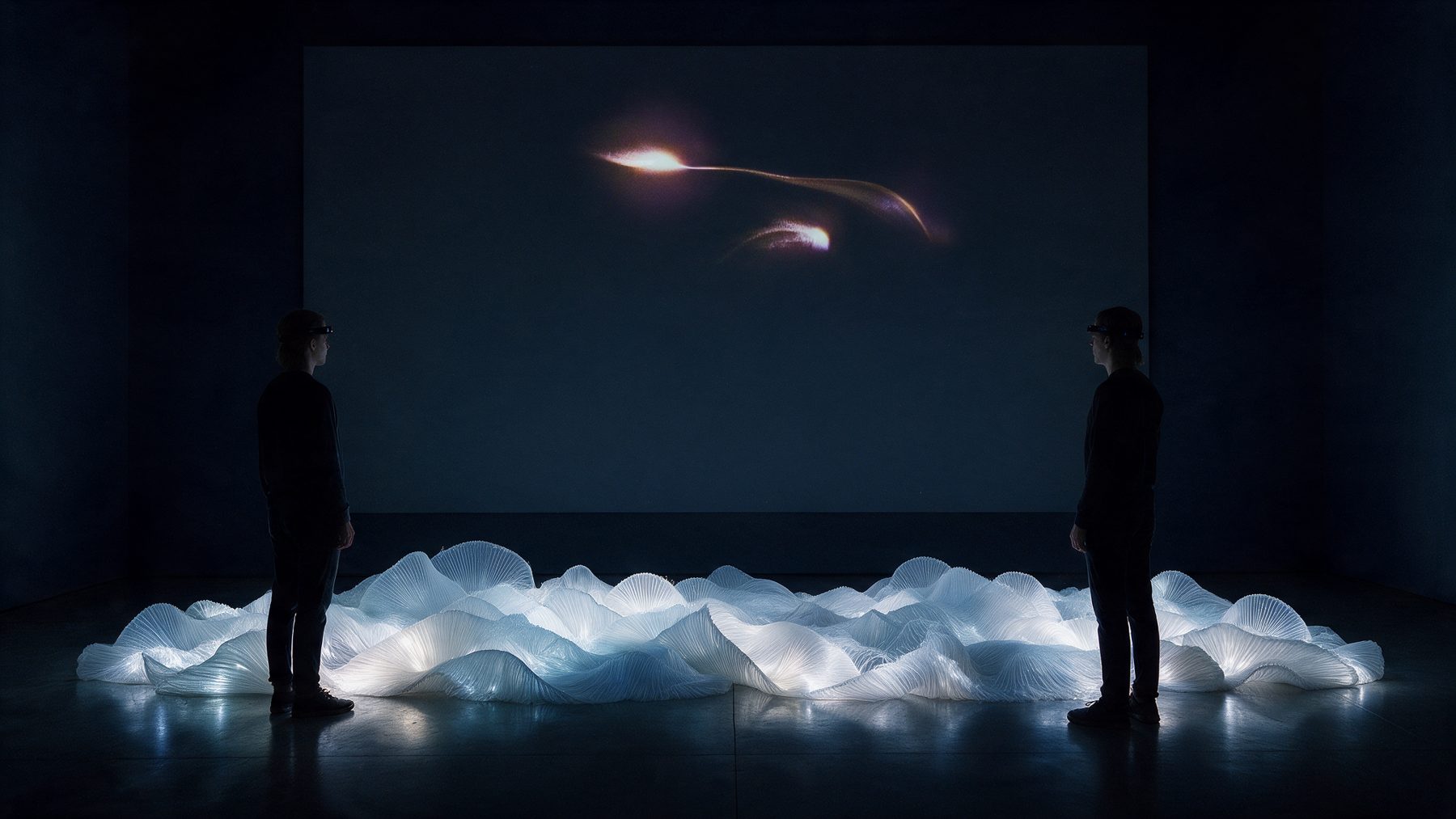
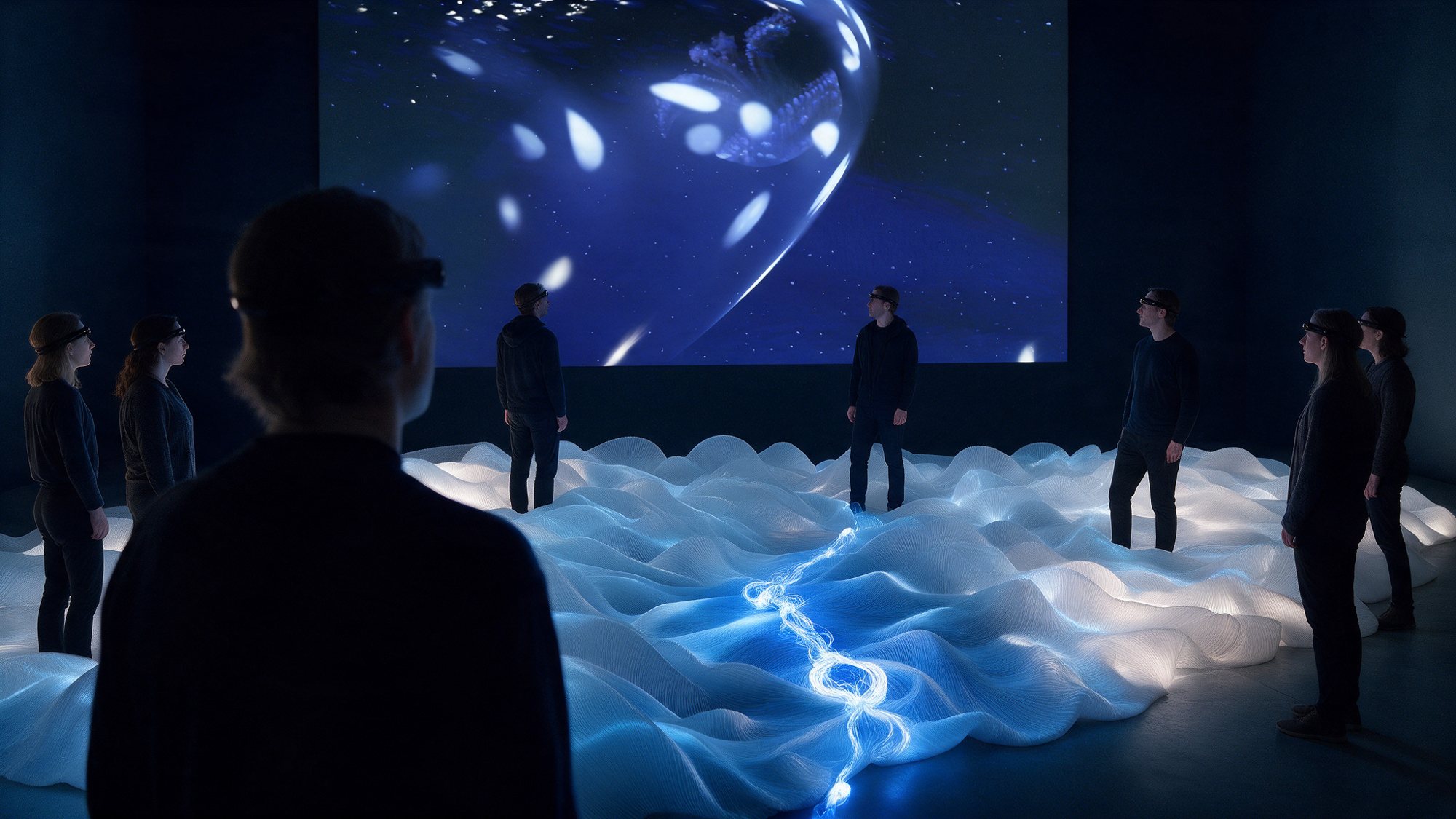
In a darkened room a low sculpture of pleated silk, organza and tulle, woven with optical fibre and lit from within, spreads across the floor like a seabed. Behind it the Pleione paintings drift on a large screen. Left alone, the reef is bleached: pale, cold, barely breathing.
Visitors wearing light EEG headbands stand at its edge. As their attention settles, colour returns around them; when two rhythms fall into accord, a thread of light runs between them; when many align, the whole seabed breathes. When they leave, it keeps an afterimage and slowly pales again. Nothing reads moods or thoughts: the signal is received as a jellyfish receives a touch, a physical event that releases light.
Currently in development in dialogue with neuroscientists. Registered with the Spanish Intellectual Property Registry.